Estimated reading time: 5 minute
Table of Contents
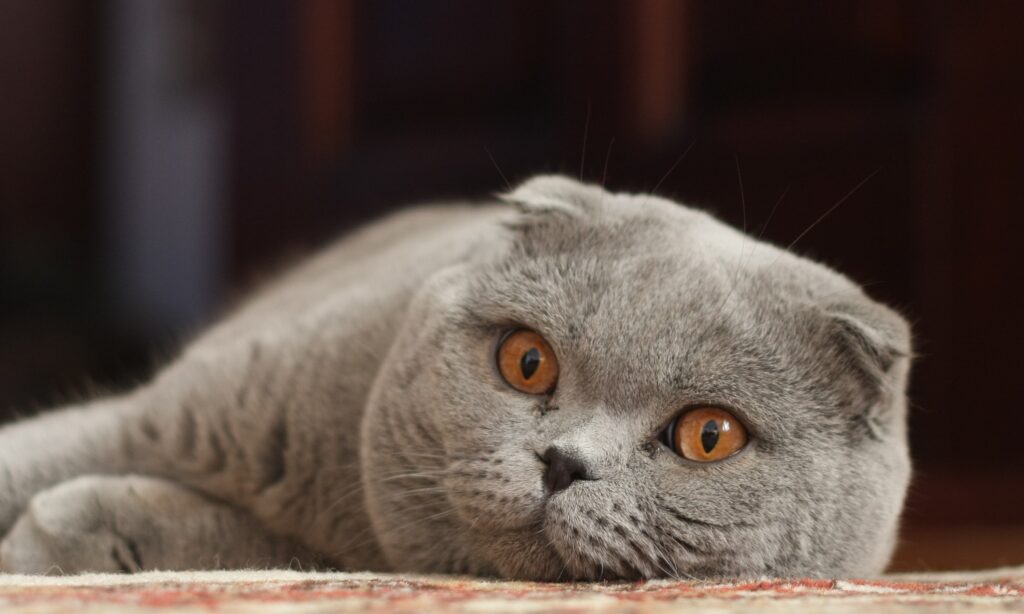
Mihai Matei, CC BY-SA 3.0 https://creativecommons.org/licenses/by-sa/3.0, via Wikimedia Commons
origin
The Scottish Fold is a cat breed that emerged in Scotland in the 1960s as a result of a natural genetic mutation. It gets its name from its distinctively curved forward ears. It was first noticed by William Ross, a Scottish farmer, and the breed became popular thanks to this discovery.
Body Weight and Appearance
The weight of an adult Scottish Fold cat varies between 2,7-4 kg for females and 4-6 kg for males. It is considered a small to medium-sized cat breed.
The most distinctive feature of the Scottish Fold is their round and small ears that curve forward. This ear structure gives them a cute, “owl”-like expression. A round head, large and round eyes, wide cheeks and a short nose are the characteristic physical features of this breed. The coat structure can be short or long and comes in a variety of colors (gray, white, cream, blue, etc.). Their bodies are muscular and sturdy.
Temperament and Characteristics
Scottish Fold cats are known for their calm, docile and playful nature. They form a strong bond with people and easily adapt to home life. They do not like to be alone, they prefer to be with people. They especially like to sit on laps and receive attention. They generally get along well with other animals and children. These cats sometimes attract attention with their strange sitting positions (for example, “Buddha sitting”). They have a medium level of energy and do not need a very high level of activity.
Heart Diseases: 1. Hypertrophic Cardiomyopathy (HCM)
What is Hypertrophic Cardiomyopathy?
Hypertrophic cardiomyopathy (HCM) is the most common heart disease in cats. This disease is characterized by thickening (hypertrophy) of the heart muscles. Although the term "enlarged heart" is often used, this condition is actually enlargement of the atria This enlargement can prevent blood from being pumped properly and reduce the heart's ability to distribute blood throughout the body. Enlargement of the atria increases the risk of clots, which can aortic thromboembolism (ATE) In such cases, it may be necessary to prescribe anticoagulant medications.
HCM in Scottish Fold Cats
HCM in Scottish Fold cats is thought to be a genetic disease. As in other breeds, it is characterized by thickening of the heart muscles and may not show symptoms in the early stages. Although HCM is not common in Scottish Fold cats, it is a type of cardiomyopathy that is also diagnosed in this breed. It is suggested that this breed may be associated with HCM due to joint problems (osteochondrodysplasia) due to genetic mutation.
symptoms
• Difficulty breathing and shortness of breath
• Weakness, easy fatigue
• Loss of appetite and weight loss
• Loss of consciousness or fainting (rare)
• Fluid accumulation in the chest or abdominal cavity (congestive heart failure)
Diagnosis and Treatment
HCM is usually diagnosed by echocardiography (ultrasound). This can help determine the thickness of the heart walls and the width of the atria. If heart enlargement (atrial dilatation) is detected, atrial stenosis may be performed to reduce the risk of clots. anticoagulant drugs may be prescribed. Treatment aims to slow the progression of the disease and control the symptoms. Early diagnosis and regular check-ups are the best way to prevent the disease from progressing.
2. Arterial Thromboembolism (ATE)
What is Arterial Thromboembolism?
Arterial thromboembolism (ATE) usually occurs when clots in the heart enter the circulation in the body and block the veins leading to the legs or organs. This condition manifests itself with symptoms such as sudden paralysis, pain and coldness of the hind legs. Paralysis of the hind legs in particular is a very worrying situation for the patient's owners.
ATE in Scottish Fold Cats
ATE can occur in Scottish Fold cats as a result of HCM. The enlargement of the heart (enlargement of the atria) increases the risk of a clot forming. This clot usually travels into the aorta and reaches the hind legs, blocking blood flow. This requires immediate medical attention.
symptoms
• Sudden paralysis: Loss of movement, especially in the hind legs
• Cold paws: The paws become cold because the blood flow to the legs is blocked.
• Severe pain and meowing: Your cat may suddenly feel severe pain and meow constantly.
• Respiratory changes: Rapid breathing may occur due to stress and pain.
Treatment
Arterial thromboembolism, an emergency It is considered. Treatment involves removing the blockage and dissolving the clot. This is usually done with blood thinners, painkillers and clot-dissolving drugs. However, in cases where the heart disease has progressed to the stage of congestive heart failure, additional treatments such as diuretics may be added to the protocol. Surgery is also an option, but according to current scientific publications, the success rate of surgery is quite low.
Recommendations for Scottish Fold Owners
• Regular Veterinary Checks: Scottish Fold cats should have regular heart screenings due to their genetic predisposition. If HCM is diagnosed early, the progression of the disease can be slowed.
• Beware of Clot Risk: Heart enlargement (atrial dilation) increases the risk of clot formation. Therefore, blood thinners may be used. When your veterinarian recommends these medications, you should be careful to use them regularly.
• Take Symptoms Seriously: If you notice symptoms like sudden paralysis, cold paws, or intense meowing, contact your veterinarian immediately. Symptoms like shortness of breath, weakness, and loss of appetite can be warning signs that HCM is progressing. If you notice these symptoms, contact your veterinarian immediately.
• Early Intervention: Arterial thromboembolism is an emergency and early intervention increases your cat's chances of survival.
• Follow the Treatment Plan: Use the medications recommended by your veterinarian regularly. Blood thinners and anticoagulants can prevent this condition from reoccurring.
Other Articles You May Be Interested In
“This brain of mine is more than mortal, as time will tell.”
Ada Lovelace
