Estimated reading time: 5 minutes
Contents
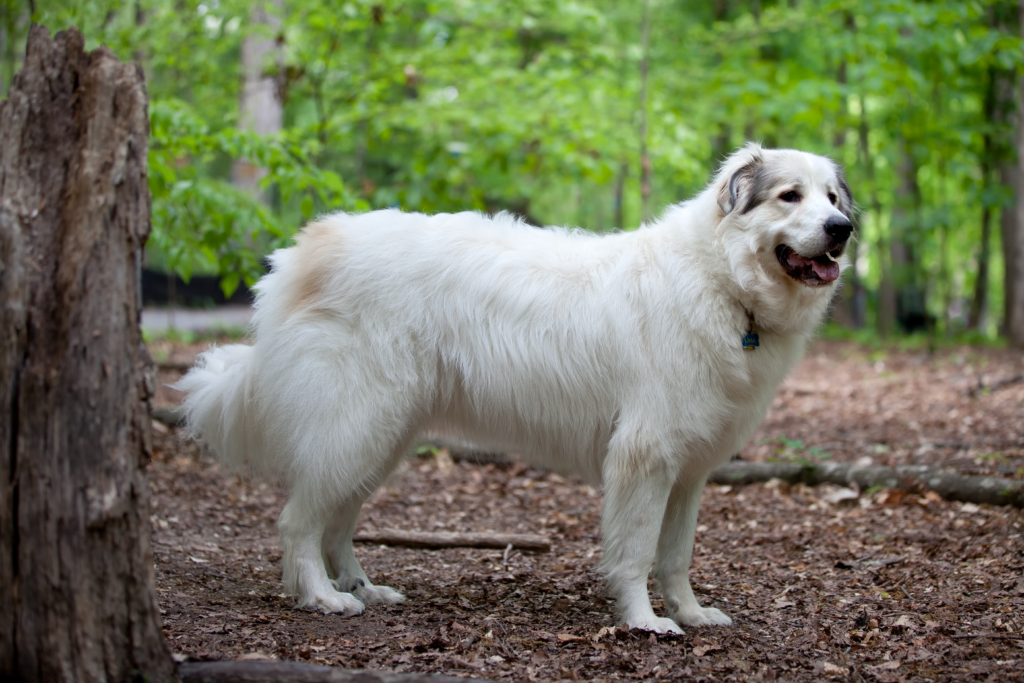
The Pyrenean Mountain Dog is a large and powerful dog breed that originated in the Pyrenean Mountains as herd protectors. The main reported heart problems in Pyrenean Mountain Dogs are myocardial infarction, a rare condition in dogs, and tricuspid dysplasia, a congenital valve disease. This page covers the breed's characteristics, these two diseases, and the stages of a cardiology examination.
origin
The Pyrenean Mountain Dog is a breed of herding dog that originated in the Pyrenees Mountains on the border of France and Spain . Throughout history, it has been used to protect flocks of sheep and defend them from predators. Today, it is popular as a guard dog and a family-friendly pet.
Body Weight and Appearance
The Pyrenean Mountain Dog belongs to the category of large and giant breeds . Adult males weigh around 50-54 kg , while females weigh around 40-45 kg.
This breed has a large, powerful, and imposing build . Its dense, double-layered coat provides resistance to cold climates. Its white coat can be combined with gray, brown, or light yellow markings.
They have large heads, strong jaws, and drooping ears. Their bodies are sturdy, their chests broad, and their legs strong. These features allow them to move easily in mountainous terrain.
Temperament and Characteristics
The Pyrenean Mountain Dog is brave, independent, and protective . While loyal and affectionate towards their owners , they are reserved and wary of strangers. Due to their independent decision-making abilities, they were used as herding dogs. They generally get along well with children, but their protective instincts require good training and early socialization. They have moderate exercise needs and enjoy roaming freely in open spaces.
Heart Diseases: 1. Myocardial Infarction
Myocardial infarction is damage to a portion of the heart muscle due to insufficient blood supply. While very common in humans, it is quite rare in dogs: a retrospective autopsy study found that only 0,8% of dogs had a recent or recently developed infarction.
• Pyrenean Mountain Dogs : This breed stands out significantly among dogs diagnosed with myocardial infarction. In a referral center in the US, 9% of myocardial infarction cases were Pyrenean Mountain Dogs; their share of the overall patient population in the same center was only 0,1%. Of all breeds, most dogs diagnosed with myocardial infarction were middle-aged or elderly.
• Difference from humans : In dogs, myocardial infarction often develops as a result of another disease, not atherosclerosis. Associated diseases reported include infectious inflammation of the heart valve (infective endocarditis), tumors, kidney inflammation (glomerulonephritis), immune system destruction of red blood cells (immune-mediated hemolytic anemia), and death of pancreatic tissue (pancreatic necrosis). Many of these conditions predispose to clot formation or vascular occlusion. Atherosclerosis, however, has been observed in only a small number of cases.
• Symptoms : The most common reasons for seeking medical attention are fatigue, loss of appetite, and digestive symptoms such as vomiting or diarrhea.
• Physical examination findings : ECG may reveal ventricular or atrial rhythm disturbances and conduction abnormalities. Echocardiography may show decreased motion in part or all of the heart wall and left ventricular enlargement.
• Treatment approach : Treatment is directed at the underlying disease that caused the myocardial infarction; however, the myocardial infarction itself can significantly worsen the course of the disease. The treatment plan is determined by a veterinary cardiologist after examination.
For a general overview of heart muscle diseases, please see the article on Myocardial Diseases in Dogs .
2. Tricuspid Valve Dysplasia
Tricuspid dysplasia is a congenital malformation of the tricuspid valve and its supporting structures, located between the right atrium and right ventricle. The valve often fails to close completely, causing backflow of blood into the right atrium. Less frequently, the valve narrows.
• In Pyrenean Mountain Dogs : This breed (Great Pyrenees) is among those predisposed to tricuspid valve dysplasia. The disease is most common in large breed male dogs. Its higher incidence in some breeds suggests a genetic role; a genetic basis has been demonstrated in Labrador Retrievers.
• How does it affect you? : Blood leaking back through the valve enlarges the right atrium and right ventricle. If the regurgitation is severe, right heart failure develops and fluid accumulates in the abdomen. In the enlarged atrium, rhythm disturbances such as atrial fibrillation can occur and significantly worsen the dog's condition.
• Symptoms : The dog may appear healthy for a long time; mildly affected dogs may not show symptoms for years. As the disease progresses, easy fatigue or collapse during exertion, abdominal swelling, and prominent neck veins may occur.
• Murmur : The murmur is best heard from the right side of the chest. In severe cases, the valve offers almost no resistance to backflow, so the murmur may be very faint or inaudible. Therefore, the intensity of the murmur does not always reflect the severity of the disease.
For more details, please see the article on Tricuspid Valve Dysplasia .
How are heart diseases evaluated?
Heart diseases in Pyrenean Mountain Dogs are primarily diagnosed through echocardiography and ECG; however, the dog's condition is assessed holistically. The cardiology examination proceeds in the following order:
• Information form : history, complaints, past illnesses, and respiratory rate.
• Physical examination : Murmurs and rhythm disturbances are checked with a stethoscope; the neck veins and abdomen are also evaluated.
• Chest X-ray in two positions : The heart silhouette and lungs are evaluated. In severe tricuspid regurgitation, enlargement of the right atrium and right ventricle may be observed.
• Echocardiography : This involves using ultrasound of the heart to examine the structure of the valves, the size of the heart chambers, and the movement of the heart wall.
• ECG : Rhythm and conduction disorders are evaluated.
• Blood pressure measurement
• Blood tests : These are determined if deemed necessary. In dogs with heart muscle damage, blood values indicating this damage may be elevated; underlying diseases that could lead to a heart attack are also investigated.
The follow-up and treatment plan is determined by a veterinary cardiologist after examination, according to the type and stage of the disease.
Advice for Pyrenean Mountain Dog Owners
• Examination in puppyhood : Tricuspid valve dysplasia is congenital, and mild cases may remain asymptomatic for a long time. Therefore, cardiology examination in puppyhood is important.
• General health : Since myocardial infarction in dogs is often accompanied by another illness, weakness, loss of appetite, or digestive symptoms in middle-aged and elderly dogs should not be ignored.
• Regular checkups : Heart checkups are necessary throughout life, even if the dog appears healthy.
• Pre-anesthesia : Every dog, regardless of age, must undergo a cardiology examination before receiving anesthesia.
• Emergency symptoms : Any dog exhibiting sudden weakness or lethargy, difficulty breathing, and rapidly increasing abdominal swelling should be evaluated by a veterinarian immediately.
The Pyrenean Mountain Dog is a valuable family dog with a strong, loyal, and protective nature. Even without symptoms, dogs of this breed should have their hearts regularly evaluated by a veterinary cardiologist.
Other Articles You May Be Interested In
"We should not forget to live instead of living lost in dreams."
JK Rowling
