Estimated reading time: 9 minutes
Contents
- 1. Why are the stages of heart disease determined?
- 2. Stages of Mitral Valve Disease in Dogs
- 3. How to Differentiate B1 and B2 Levels in Dogs?
- 4. Stages of Cardiomyopathy in Cats
- 5. Latent and Clinical Phases in Dilated Cardiomyopathy in Dogs
- Will Stage 6 regress?
- 7. Home Monitoring: Sleep Respiratory Rate
- 8. How is the stage determined during a cardiology examination?
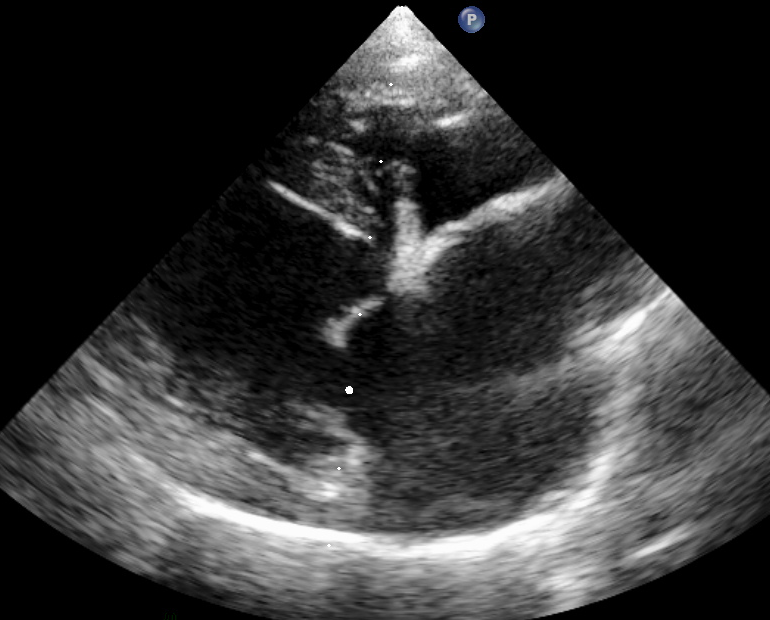
Owners of cats or dogs with heart disease may hear terms like “stage B1” or “stage B2” after an examination. These letters come from a classification system called stages of heart disease . Stages range from A to D: A describes an animal that doesn’t yet have heart disease but is at risk, while D describes heart failure that doesn’t respond to standard treatment. This classification is defined by international expert consensus for mitral valve disease in dogs and cardiomyopathies in cats.
1. Why are the stages of heart disease determined?
Heart disease and heart failure are not the same thing. Heart disease is a structural defect in the heart. Heart failure, on the other hand, describes the symptoms that arise because the heart's function is impaired: fluid accumulation in the lungs or a body cavity, or the heart's inability to pump enough blood to meet the body's needs. Depending on its nature and rate of progression, heart disease may or may not lead to heart failure.
Staging divides the progression of the disease over time into stages and matches each stage with an appropriate approach. This allows for screening susceptible animals, early detection and monitoring of asymptomatic disease, and separate treatment of advanced-stage patients. In feline cardiomyopathies, the stage is more important than the type of cardiomyopathy in determining how the patient should be monitored and treated.
2. Stages of Mitral Valve Disease in Dogs
In myxomatous mitral valve disease (MMVD), the structure of the mitral valve between the left atrium and left ventricle gradually deteriorates; the valve cannot close completely, and blood flows backward. It is the most common heart disease in dogs in many parts of the world. For more details, you can refer to the article on Myxomatous Mitral Valve Disease (MMVD) .
• Stage A : These are dogs at high risk of developing heart disease, but without any structural abnormalities in the heart, meaning no heart murmur; like any Cavalier King Charles Spaniel or susceptible breed without a murmur. No medication or special diet is recommended. Regular checkups, such as an annual heart auscultation, are recommended for small and susceptible breeds.
• Stage B : There is structural heart disease, for example, a murmur characteristic of mitral valve regurgitation is heard; however, the dog has never shown signs of heart failure.
• Stage B1 : These are dogs with no heart enlargement on X-ray and echocardiography, or if enlargement is found, it does not meet the following criteria. Since progression to heart failure is uncertain, no medication or diet is recommended. Follow-up echocardiography is recommended every 6–12 months depending on the findings. Exercise restriction is not necessary; the dog can walk at its own pace and should be protected from obesity.
• Stage B2 : These are asymptomatic dogs with long-standing and severe valve regurgitation, resulting in significant enlargement of the left atrium and left ventricle on X-rays and echocardiography. These dogs are expected to benefit from treatment aimed at delaying the onset of heart failure; treatment is planned as deemed appropriate by the veterinary cardiologist. Strenuous exercise and high-salt diets should be avoided. Follow-up appointments are usually every 6–12 months, but more frequent in some patients.
• Stage C : These are dogs that have shown signs of heart failure currently or in the past. Typical symptoms include rapid breathing, restlessness, difficulty breathing, and coughing. Monitoring body weight, appetite, respiratory rate, and heart rate at home is recommended. For more details, see the article on Congestive Heart Failure in Dogs .
• Stage D : This is the final stage where symptoms of heart failure do not respond to standard treatment. Advanced or specialized treatment approaches are required for the dog to live comfortably.
3. How to Differentiate B1 and B2 Levels in Dogs?
In both stages, the dog shows no symptoms; the difference lies in the measurements of the heart. According to international expert consensus, the four criteria defining stage B2 are as follows:
• Murmur severity : Grade 3 or higher out of 6.
• Left atrium/aorta ratio (LA/Ao) : In echocardiography, a ratio of 1,6 or greater measured at the beginning of the heart's relaxation phase (diastole) on a short-axis image taken from the right side.
• Left ventricular diameter : The internal diameter at diastole, corrected for body weight, should be 1,7 cm or greater; for example, at least 3,3 cm in a 10 kg dog.
• X-ray heart size : A vertebral heart score (VHS), adjusted for race, greater than 10,5, comparing the heart to the vertebrae.
Since treatment is lifelong, ideally all of these criteria should be met before starting treatment. The most reliable method is demonstrating left atrial and left ventricular enlargement by echocardiography.
X-rays can be helpful when echocardiography is not possible, but they should be interpreted carefully due to differences in chest structure and race. In this case, clear cardiac enlargement (VHS above 10,5 as a general racial value), accelerated growth in consecutive images, or a vertebral left atrium score (VLAS) of 3 or higher suggests stage B2. These measurements are described in the article "X-rays in Cardiology Examination ".
4. Stages of Cardiomyopathy in Cats
The same letters are used for heart muscle diseases (cardiomyopathies) in cats. The most common type is hypertrophic cardiomyopathy, in which the heart muscle thickens; see the article on Hypertrophic Cardiomyopathy in Cats (HCM) for details.
The primary criterion for differentiating B1 and B2 in cats is the size of the left atrium: the larger the left atrium, the higher the risk of heart failure and arterial thromboembolism. Arterial thromboembolism (ATE) is when a clot that forms in the heart blocks a distant artery, and it is common in cats, causing weakness or paralysis in the legs. For more details, see the article on Arterial Thromboembolism in Cats .
• Stage A : These are cats predisposed to cardiomyopathy but without signs of heart muscle disease. Maine Coon, Ragdoll, British Shorthair, Persian, Bengal, Sphynx, Norwegian Forest Cat, and Birman are considered high-risk breeds. No medication or special diet is recommended. Annual echocardiography should be considered for breeding or high-risk Maine Coon and Ragdoll cats; genetic testing only provides helpful information, as not every cat carrying the mutation will develop the disease, and a negative result does not rule it out.
• Stage B1 : These are asymptomatic cats with a normal or slightly enlarged left atrium. The risk is low, and most never develop symptoms. Treatment is generally not recommended; an annual check-up to see if the left atrium is enlarged is advised.
• Stage B2 : These are asymptomatic cats with moderate to severe enlargement of the left atrium; they are at higher risk of heart failure and thromboembolism. Galloping, arrhythmias, excessive thickening of the heart muscle, decreased contractile strength, and clots in the heart or echocardiographic images showing blood stagnation are additional risk factors. Treatment to prevent clot formation is planned as deemed appropriate by a veterinary cardiologist. Check-ups are generally performed every 6–12 months, and stress should be minimized during the examination.
• Stage C : These are cats that have shown signs of heart failure or ATE (Acute Respiratory Disorder) currently or in the past. Re-examination is recommended approximately every 2–4 months or as needed. For details, please refer to the article on Congestive Heart Failure in Cats .
• Stage D : These are cats in which symptoms of heart failure persist despite treatment.
5. Latent and Clinical Phases in Dilated Cardiomyopathy in Dogs
In dilated cardiomyopathy (DCM), the heart chambers enlarge and the heart's contractile strength decreases. Two stages are defined in this disease; for details, please refer to the article Dilated Cardiomyopathy (DCM) in Dogs .
• Latent (preclinical) phase : Echocardiography or ECG shows signs of illness, but the owner may not notice any symptoms. This period can last from months to years. Most dogs have a normal physical examination; the disease is usually detected in high-risk breeds during screening or examination when a murmur or irregular rhythm is heard.
• Clinical phase : Heart failure, syncope, or sudden death can occur as a result of progressively decreasing contractile strength, dilation of the chambers, or worsening of the rhythm disorder. In some dogs, sudden death may be the first sign.
Identifying the latent period is important, as treatment initiated during this period has been shown to delay the onset of symptoms. The treatment plan is determined by a veterinary cardiologist after examination.
Will Stage 6 regress?
In the staging system, disease progression from one stage to the next is expected unless the course of the disease is altered by corrective treatment such as surgery. A dog that has developed heart failure will remain in stage C even if the symptoms disappear completely with treatment; only exceptional dogs that have undergone successful mitral valve repair surgery may be re-tested to stage B. A cat that has had heart failure or ATE will also remain in stage C even if the symptoms disappear.
The progression of the disease does not occur at the same rate in every animal. In small breed dogs, the disease usually progresses slowly, but sometimes unpredictably; in large breeds, the progression is often faster. In most dogs, a heart murmur is heard years before heart failure. Many cats with mild disease can also live for years without showing any symptoms.
7. Home Monitoring: Sleep Respiratory Rate
For dogs, starting from the asymptomatic stage B, and for cats from stage B2, it is recommended that owners count the respiratory rate while the animal is sleeping or in deep rest. Among the values monitored at home in dogs, an increase in resting respiratory rate above the normal value is the best indicator of approaching heart failure.
• How to count?: While the animal is sleeping at normal room temperature, the rise and fall of the chest is counted for one minute; one full rise and fall is one breath. The count is preferably done at the same time each day and recorded in a notebook.
• In dogs : In dogs without fluid in their lungs, the sleep respiratory rate is usually below 30 breaths per minute. Consistent counts above 30 may indicate fluid buildup in the lungs and require veterinary attention. In dogs undergoing treatment for heart failure, the goal is also to keep this rate below 30 breaths per minute.
• In cats : In healthy cats and cats with asymptomatic heart disease, the respiratory rate rarely exceeds 30 breaths per minute. In cats being treated for heart failure, the goal is to keep the sleep respiratory rate below 30 breaths per minute. In both species, a veterinary cardiologist can determine the animal-specific warning value.
8. How is the stage determined during a cardiology examination?
The stage is determined by evaluating all stages of the examination together. The cardiology examination proceeds in the following order:
• Information form : history, complaints, past illnesses, and respiratory rate counted at home.
• Physical examination : including auscultation; assessment of murmur intensity, canter sound, and rhythm irregularities.
• Chest X-ray in two positions : heart enlargement (VHS, VLAS) and fluid in the lungs.
• Echocardiography : To determine the cause of the murmur, and to measure the left atrium and left ventricle; this is the preferred method for diagnosing cardiomyopathy in cats.
• ECG : evaluation of rhythm disorders.
• Blood pressure measurement : investigation for concomitant hypertension; this should also be ruled out as a possible underlying cause in cats with thickened heart muscle.
• Blood tests : if deemed necessary; kidney function and electrolytes, thyroid hormone in cats, and NT-proBNP if needed.
Every cat and dog, regardless of age, must undergo a cardiology examination before receiving anesthesia. For details, please see the article "Pre-Anesthesia Cardiology Examination" .
If a pet owner hears a specific stage name from their veterinarian, or notices an increase in respiratory rate during sleep at home, their cat or dog's heart should be evaluated by a veterinary cardiologist.
Other Articles You May Be Interested In
"He who begins the work, completes half the battle; dare to know."
Horatio
