Estimated reading time: 5 minute
Contents
Why Does My Cat/Dog Need a Pacemaker?
Normally, heart contractions occur when electrical impulses are sent to the chambers of the heart. However, in some cases, these electrical impulses do not function properly. Such electrical abnormalities, like heart block and sinus node dysfunction , cause the heart rate to slow excessively .
For more information on these rhythm disorders, you can refer to the article Cardiac Arrhythmias in Cats and Dogs .
Because of this slow heart rate, your dog may experience the following symptoms:
• Exercise intolerance (inability to tolerate exercise)
• Collapse or fainting (syncope)
• Heart failure
Many pet owners may consider the slowing of their dog's heart rate to be "a natural part of aging," but this is often caused by a low heart rate . Without a pacemaker implantation, these symptoms can worsen and, in some cases , the heart may even stop completely , leading to sudden death . In suitable patients, a pacemaker significantly reduces or eliminates symptoms and, in some diseases, extends life expectancy.
What is a Pacemaker and How is it Inserted?
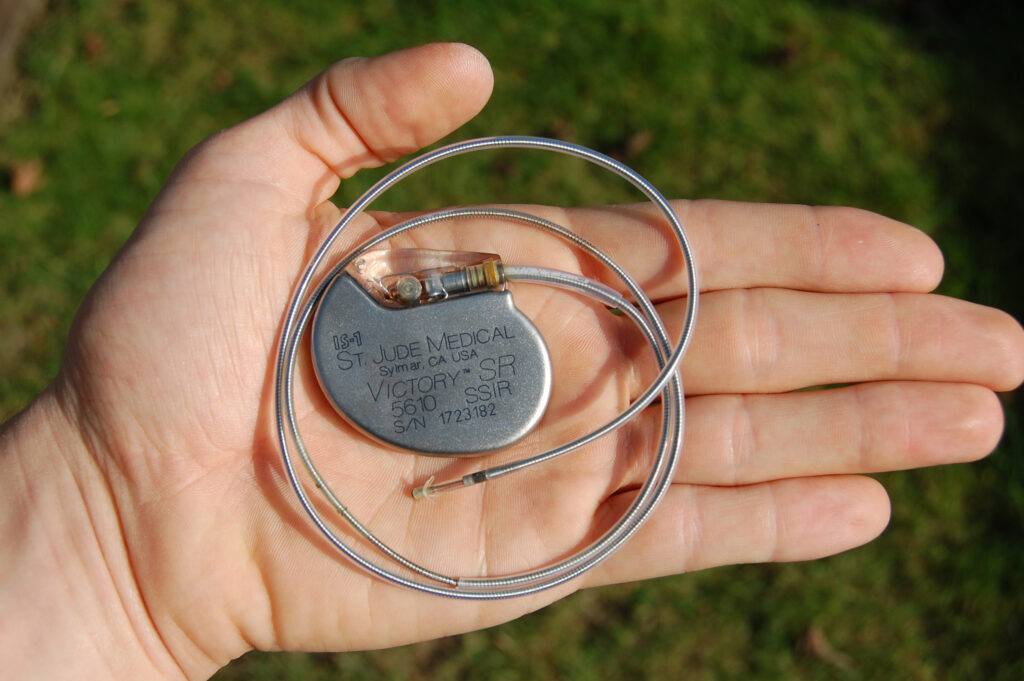
A pacemaker is a device that supports the heart's electrical system and allows the heart to beat at a normal rate. It has two main components:
• Pulse Generator : It has a power source and a computer that controls and monitors heart rate.
• Pacing Cables (Electrodes) : These special cables send electrical signals from the pulse generator to the heart.
Pacemakers used in dogs and cats are generally derived from devices designed for humans . While these devices may not be suitable for human use due to the shorter lifespan of the energy source, they are still suitable for dogs and cats because of their shorter lifespans.
How to Place?
1. Jugular Vein Access : In most cases, the pacemaker is implanted through the jugular vein on the right side of the neck.
2. Placement on the Outer Surface of the Heart: In patients with small stature and certain additional medical conditions, the pacemaker lead is usually placed on the outer surface of the heart via the diaphragm through the abdomen; the pacemaker itself is then placed on the abdominal wall.
3. Temporary Pacemaker Use : A temporary pacemaker is used to control the heart rate during anesthesia . This device is activated before a permanent pacemaker is implanted.
Complications • Cable dislodgement (the most common serious complication; may occur hours or months after the procedure) • Rhythm disturbances (arrhythmias) • Heart or blood vessel perforation
• Infection
• Complications related to anesthesia
• Death in rare cases
Home Care and Things to Consider After Pacemaker Insertion
Healing Process:
• Incision Care : It is essential to keep the stitches clean and dry . Your veterinarian will show you how to change the bandage covering the neck area. Your veterinarian will determine how often the bandage should be changed.
• Recovery Time : Your veterinarian will determine when the stitches will be removed and the dates for follow-up appointments.
• Activity Restriction : The most common serious complication is the cable becoming detached. Therefore, movement is restricted during the first few weeks; your dog is not allowed to run, jump, or wrestle with other animals. The duration of the restriction will be determined by your veterinary cardiologist.
• Collar Use : You should use a chest harness instead of a neck collar , as a neck collar can put pressure on the pacemaker generator.
• Medications : Antibiotics may be used during and, if necessary, after surgery, as deemed appropriate by the veterinary cardiologist. Some patients may require additional medication depending on their existing condition.
• Diet : No special diet is required after pacemaker surgery. However, follow your veterinarian's recommendations.
Situations to be considered:
• If you notice any swelling, redness, or discharge, tell your veterinarian.
• If your dog scratches the stitches or constantly licks the area, an Elizabethan collar (protective hood) can be used.
Situations That Dogs and Cats with Pacemakers Should Avoid
• MRI (Magnetic Resonance Imaging) and Certain Medical Procedures: MRI scans, surgical procedures using electrocautery (electric cutting and burning devices), and electric shock applications can interfere with the functioning of a pacemaker. It is essential to inform your doctor about having a pacemaker before any examination or surgery.
Follow-up Inspections and Controls
• Initial Check-up : Several check-ups are performed during the first few months after pacemaker implantation.
• Annual Checkups : You should visit your veterinarian at least once a year to assess the pacemaker's battery life and function.
• The sequence of the follow-up examination is as follows : Cardiology examination information form (history, complaints, past illnesses, respiratory rate) → physical examination (including auscultation) → chest X-ray in two positions (including catheter position) → echocardiography → ECG → blood pressure measurement → blood tests if deemed necessary. In addition, the pacemaker's status and settings are checked with a special device.
• Anesthesia : Every cat and dog, regardless of age or whether they have a pacemaker, must undergo a cardiology examination before receiving anesthesia.
• Emergency Checks : If you notice any signs of weakness, lethargy, or fainting in your dog , you should contact your veterinary cardiologist immediately.
Quality of Life in Dogs with Pacemakers
In most dogs that have pacemakers implanted, symptoms are significantly reduced and quality of life improves. Your dog's exercise and daily activities can return to normal levels after the recovery process. You can improve your dog's quality of life by following the check-up program recommended by your veterinarian.
Most dogs that have pacemakers implanted continue to live vibrant, active, and happy lives after surgery.
The most important step in this process is to keep your dog's movements under control and attend regular recommended follow-up checkups.
If you have any concerns, it is best to consult your veterinarian.
Other Articles You May Be Interested In
“Hope lies in dreams, in imagination, and in those who dare to make dreams come true.”
Jonas Salk
