Estimated reading time: 3 minute
Table of Contents
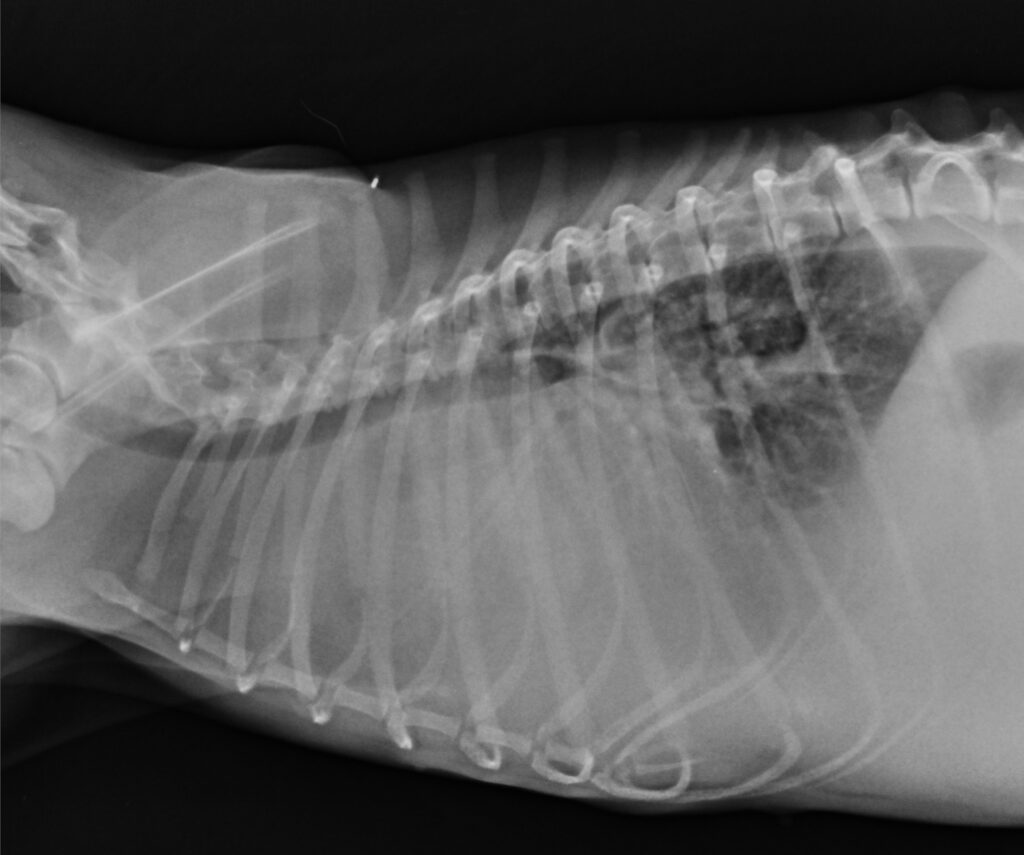
What is pleural effusion?
Pleural effusion is fluid that accumulates in the chest cavity outside the lungs. When it reaches large volumes, it partially compresses/collapses the lungs and causes difficulty breathing. This can usually be relieved by aspirating the fluid through the chest wall with a needle.
What are the symptoms of pleural effusion?
“Symptoms” (clinical signs) include short and shallow breathing, difficulty trying to rest or relax, increased abdominal effort when breathing, and respiratory distress.
Pleural effusion can be caused by a variety of underlying conditions, from infections to heart disease and even some types of tumors, and these conditions can also cause additional symptoms.
How is pleural effusion diagnosed?
Pleural effusion is often suspected based on symptoms and physical examination findings by your veterinarian, and the diagnosis can be confirmed with radiographs (X-rays), ultrasound, or diagnostic thoracocentesis, where a needle is placed into the chest cavity to attempt to drain any fluid present (chest tap procedure). Once the fluid is identified and removed, it is sent to a laboratory for analysis to determine its contents and how best to treat it.
Other tests, such as echocardiography (heart ultrasound), may be used to evaluate heart disease, and blood work, ultrasound, and computed tomography (CT scan) may be useful to evaluate other possible causes.
How is pleural effusion treated?
The treatment for pleural effusion is to remove the fluid. While this can help an animal breathe better, it is almost never a curative intervention because the fluid is caused by an underlying cause. The underlying cause must be treated to prevent the fluid from accumulating again. Treatment may require certain medications or even surgery. Thoracocentesis (fluid removal) may need to be repeated periodically.
What is the prognosis (course) of pleural effusion?
The course of the disease (prognosis) depends on the underlying cause. Generally, pleural effusion is removed but not treated. In other words, the fluid can be removed from the body and treatment can be applied to the disease that caused it, but if the underlying cause persists, repeated fluid withdrawals may become necessary. Many patients die or are euthanized due to the severity of the underlying disease causing the effusion. In some cases of infection or idiopathic disease (where the cause cannot be found), treatment is effective and the effusion is removed. In other cases, the patient's quality of life is quite good despite the need for intermittent thoracocentesis.
Other Articles You May Be Interested In
“If you try it, you will understand. We need a veterinarian more than a human doctor.”
Mehmet Akif Ersoy
