Estimated reading time: 5 minute
Table of Contents
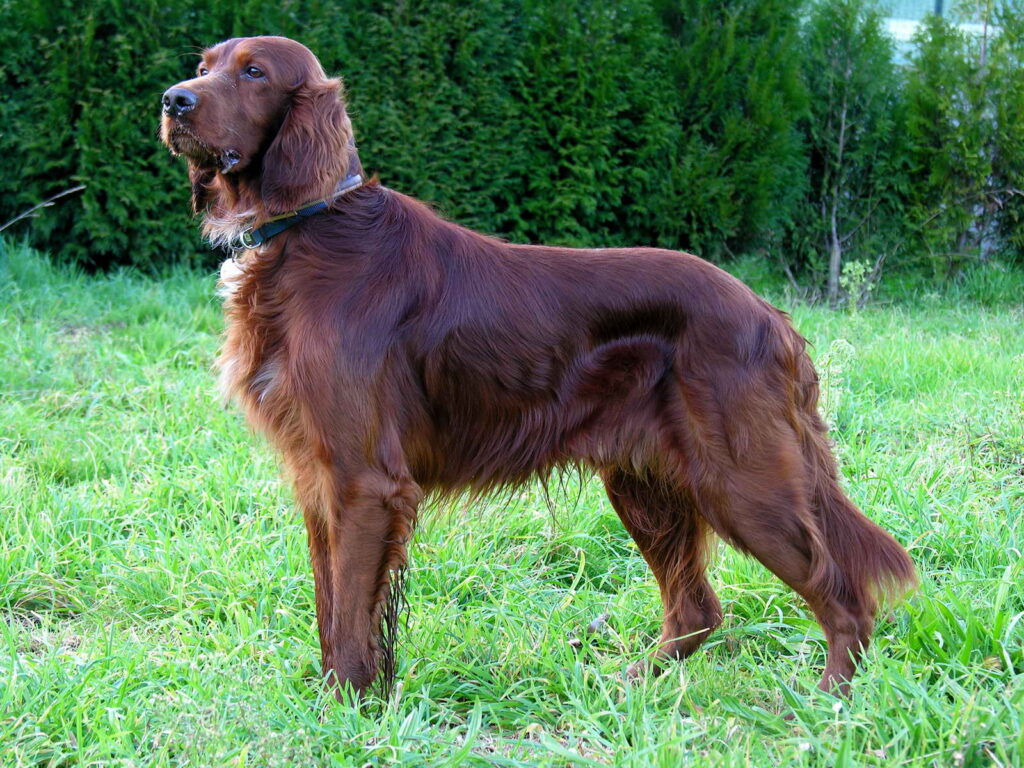
By Luis Miguel Bugallo Sánchez (Lmbuga Commons)(Lmbuga Galipedia)Publicada por/Publish by: Luis Miguel Bugallo Sánchez – Own work, CC BY-SA 3.0, https://commons.wikimedia.org/w/index.php?curid=505817
origin
Irish Setter, origin Irlanda It is an old hunting dog breed. First bird hunting This breed, used for hunting, attracted attention with its aesthetic appearance and its help to hunters. Over time, pet and show dog has also gained popularity as.
Body Weight and Appearance
Irish Setter, large size It is a dog breed. Adult males usually 27-32 kg, females are 25-29 kg It weighs .
Irish Setter, tall, elegant and athletic is known for its structure. One of its most striking features is, silky, long and straight hairis. Feather color is usually red or chestnut red Its fur is longer in certain areas such as the ears, chest, legs and tail. Its long legs, deep chest and elegant neck give it a noble stance Their eyes are usually dark brown and have a friendly look.
Temperament and Characteristics
Irish Setter, energetic, affectionate and playful It is a breed. It is friendly towards family members and especially with children. They get along very well.. Due to its high energy daily exercise requirement is high. Thanks to its intelligence and trainability, it can be successful in obedience training. However, sometimes in particular ve independent behaviors, so early training is important. Irish Setters are generally friendly towards strangers and have a low tendency towards aggression. Hunting instincts Therefore, caution should be exercised in open areas and they should not be walked without a leash.
Heart Disease: 1. Patent Ductus Arteriosus (PDA)
What is PDA?
Patent Ductus Arteriosus is a duct that should close after birth. a vessel called the ductus arteriosusThis open vessel allows oxygen-rich blood to return to the pulmonary artery. This overactivity of the heart and lungs leads to
PDA in Irish Setters
Irish Setter breed are prone to developing PDA It is suggested that some studies confirm this relationship, while other studies have not been able to establish this tendency (Matic, 1988; Darke, 1989; Oliveira et al., 2011). However, in the studies female dogs are at greater risk It indicated.
symptoms
• Rapid Breathing: Rapid breathing during exercise or at rest.
• Cough: Cough, especially after exercise or at night.
• Exercise Intolerance: Fatigue quickly and reluctance during play.
• Growth Retardation: Slower than normal growth in puppies.
Diagnosis and Treatment
• Diagnosis: Your veterinarian may notice a murmur while listening to the heart with a stethoscope. For a definitive diagnosis echocardiography (heart ultrasound) ve X-ray Visualization methods such as are used.
• Treatment: Surgery to close the open vein is the most common treatment method. Early diagnosis and treatment are critical for your dog to live a normal life.
2. Vascular Annular Anomaly (Persistent Right Aortic Arch – PRAA)
What is PRAA?
Persistent Right Aortic Arch (PRAA), in dogs a congenital vascular anomalyIn this condition, the aortic arch develops abnormally and by compressing the esophagus causes difficulty in eating and swallowing.
PRAA in Irish Setters
The Irish Setter breed is thought to be at high risk of developing PRAA. However, this association has not been confirmed in some studies (Matic, 1988; Krebs et al., 2014). This type of vascular anomaly is usually detected when young.
symptoms
• Vomiting After Eating: Food may be regurgitated because it cannot pass through the esophagus.
• Underweight and Weight Loss: Dogs may lose weight due to problems swallowing food.
• Regurgitation: Food coming back into the mouth immediately after eating.
Diagnosis and Treatment
• Diagnosis: PRAA is usually diagnosed by X-ray or contrast X-ray (barium swallow test).
• Treatment: The treatment is surgical. The veterinary surgeon cuts the vascular ring that compresses the esophagus and relieves the pressure. Early diagnosis improves the dog's quality of life.
Recommendations for Irish Setter Owners
• Regular Heart Checks: Regular heart checkups are recommended, as the Irish Setter breed is known to be prone to heart conditions such as PDA and PRAA.
• Nutritional Support: In dogs with PRAA, vertical feed Difficulty in swallowing can be minimized by using the feeding method (keeping the head up while eating).
• Exercise and Rest: If symptoms such as shortness of breath or tiring easily are noticed during exercise, a veterinarian should be consulted.
• Pay Attention to the Symptoms: If symptoms such as vomiting, regurgitation or rapid breathing are noticed after eating, a veterinarian should be consulted.
Irish Setter, an energetic, elegant and affectionate friend known as. However, some of these beautiful dogs may be prone to congenital heart defects should not be forgotten. Early diagnosis and regular veterinary check-ups, will help these lovely friends live a long and happy life.
Other Articles You May Be Interested In
“A reader lives a thousand lives before he dies. A person who never reads lives only one.”
George RR Martin
