Estimated reading time: 5 minute
Table of Contents
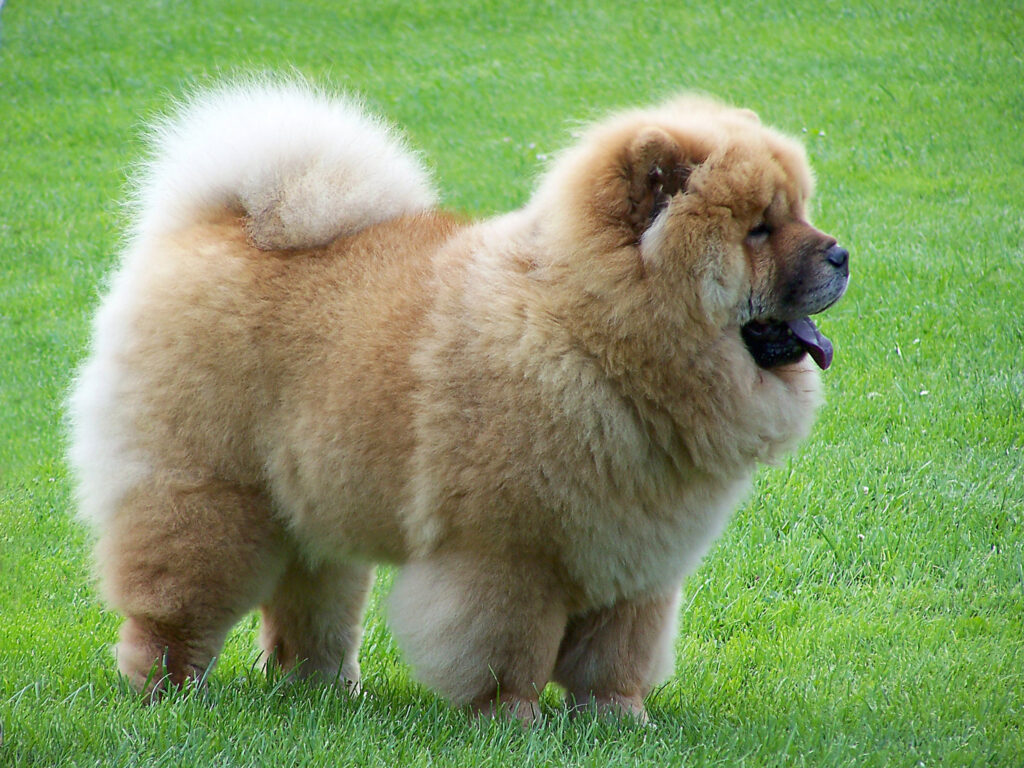
By Remigiusz Józefowicz – Own work, CC BY-SA 2.5 pl, https://commons.wikimedia.org/w/index.php?curid=2572822
origin
The Chow Chow is an ancient dog breed originating in China , historically known as the "lion dog of the Tang Dynasty." Throughout history, it has been used as a guard dog, hunting dog, and draft dog. Today, it is best known as a family-friendly dog.
Body Weight and Appearance
The Chow Chow is considered a medium to large dog breed. Adult Chow Chows typically weigh between 25-32 kg for males and 20-27 kg for females.
One of the most striking features of the Chow Chow is its lion-like mane and distinctive blue-black tongue . Its body is muscular and strong. Its coat is covered in long, fluffy hairs and can be red, black, blue, cream, or light brown (fawn). Its facial expressions are usually serious and dignified. Short, broad noses , deep chests, and strong legs are characteristic physical features of the Chow Chow.
Temperament and Characteristics
The Chow Chow is known for its independent, calm, and serious nature. Compared to other dog breeds, this breed exhibits a more independent and reserved personality. While generally loyal to their owners, they can be wary of strangers. Their protective nature makes them excellent guard dogs. Because Chow Chows have a stubborn temperament, early socialization and training are crucial. Patience and consistency are necessary during training. Their relationships with other animals and children may vary; this can be improved with early socialization.
Heart Disease: Heart Block
What is Heart Block?
Heart block is a condition in which the electrical impulses of the heart slow down or stop completely . This can cause the heart rate to slow down and there to be long pauses between beats. For more details about rhythm disorders, you can refer to the article Cardiac Arrhythmias in Cats and Dogs . Heart block is a disorder that prevents electrical signals from passing from the upper to the lower chambers of the heart. Heart blocks are classified into different degrees: 1st degree, 2nd degree (type I and type II), and 3rd degree (complete heart block).
• Level 1: The electrical signal slows down, but the heartbeat continues.
• Grade 2: Some of the impulses from the atria cannot pass to the ventricles. In advanced second-degree block, many impulses fail to pass in succession, and the heart rate slows significantly.
• Third-degree (complete) block: No impulses from the atria reach the ventricles; the ventricles continue to beat independently of the atria, with a slow escape rhythm from the reserve battery regions. This rhythm is usually slow but regular; it can lead to fainting and symptoms of heart failure.
Heart Block in Chow Chows
A case series conducted in the US reported that Chow Chows are prone to advanced second or third-degree heart block. In the same series, heavier, older, and unspayed female dogs were more common among the patients.
symptoms
• Fatigue and Exercise Intolerance: Chow Chows tire more quickly than normal.
• Fainting (Syncope): Sudden loss of consciousness, which can occur especially during exercise.
• Slow Heart Rate: A noticeably slow heart rate found during examination.
• Shortness of breath: Difficulty breathing during exercise.
• Loss of appetite and fatigue: Lack of motivation and fatigue may be experienced during daily activities.
Diagnosis and Treatment
• In breed-related congenital heart disease cases, Chow Chow is among the breeds reported to have congenital pulmonary stenosis and cor triatriatum dexter, where the right atrium is divided into two by a membrane.
How is it evaluated during a cardiology examination?
A slow heart rate found during examination is often the starting point for further investigation. A cardiology examination proceeds in the following order:
• Information form : history, complaints, past illnesses, and respiratory rate counted at home while resting.
• Physical examination : including auscultation of the heart using a stethoscope.
• Chest X-ray in two positions : heart silhouette and lungs are evaluated.
• Echocardiography : This is used to investigate any structural or congenital heart disease that may accompany the block.
• ECG : The diagnosis and severity of heart block are determined by ECG.
• Blood pressure measurement.
• Blood tests, if necessary : to investigate reversible causes that may lead to the block.
• Treatment: The treatment plan will be determined by a veterinary cardiologist based on the dog's condition after examination.
Recommendations for Chow Chow Owners
• Routine Veterinary Checkups: It is especially important for Chow Chow owners to have their dogs' heart health checked regularly.
• Symptoms : Fatigue, fainting, or easy tiredness during exercise may occur. If any of these symptoms are noticed, the dog should be evaluated by a veterinarian without delay. For details on fainting, please refer to the article on Syncope (Fainting), Seizures, and Collapse .
• Course : Severe second-degree block is associated with an increased risk of sudden death; therefore, dogs with a slow heart rate should be evaluated with an ECG.
The Chow Chow is a special dog breed with its striking appearance, independent spirit, and noble demeanor. Because Chow Chows are prone to severe heart block, even if they show no symptoms, your dog's heart should be evaluated by a veterinary cardiologist.
Every dog, regardless of age, must undergo a cardiology examination before receiving anesthesia.
Other Articles You May Be Interested In
"Prejudices are things that fools use in place of reason."
Voltaire
