Estimated reading time: 10 minutes
Contents
Recent Publications · Journal of Veterinary Cardiology · October 2026
Study details: Spalla I, Bjerknaes MB, Bertuccini T, Menciotti G, Showers A, Dossi G, Borgarelli M, Häggström J, Ljungvall I, Toschi Corneliani R, Locatelli C. A retrospective (2020–2025), multicenter study of myxomatous mitral valve disease in Chihuahuas from Italy, Sweden, and the United States of America. Journal of Veterinary Cardiology, 2026;67:37–49 (October 2026 issue; accepted for publication: June 25, 2026). DOI: 10.1016/j.jvc.2026.06.005
Type of operation: Retrospective, multicenter, observational study (2020–2025)
Center: Ospedale Veterinario San Francesco and University of Milan (Italy), Swedish University of Agricultural Sciences (Sweden), Virginia-Maryland Veterinary Faculty (USA)
Legal Disclaimer: The articles in the "Current Publications" section are summaries of scientific articles intended for veterinarians and veterinary students. Drug names and active ingredients mentioned in these articles are included solely to illustrate the findings of the relevant studies and do not constitute treatment recommendations. No medication should ever be used without a prescription and examination by a qualified veterinarian.
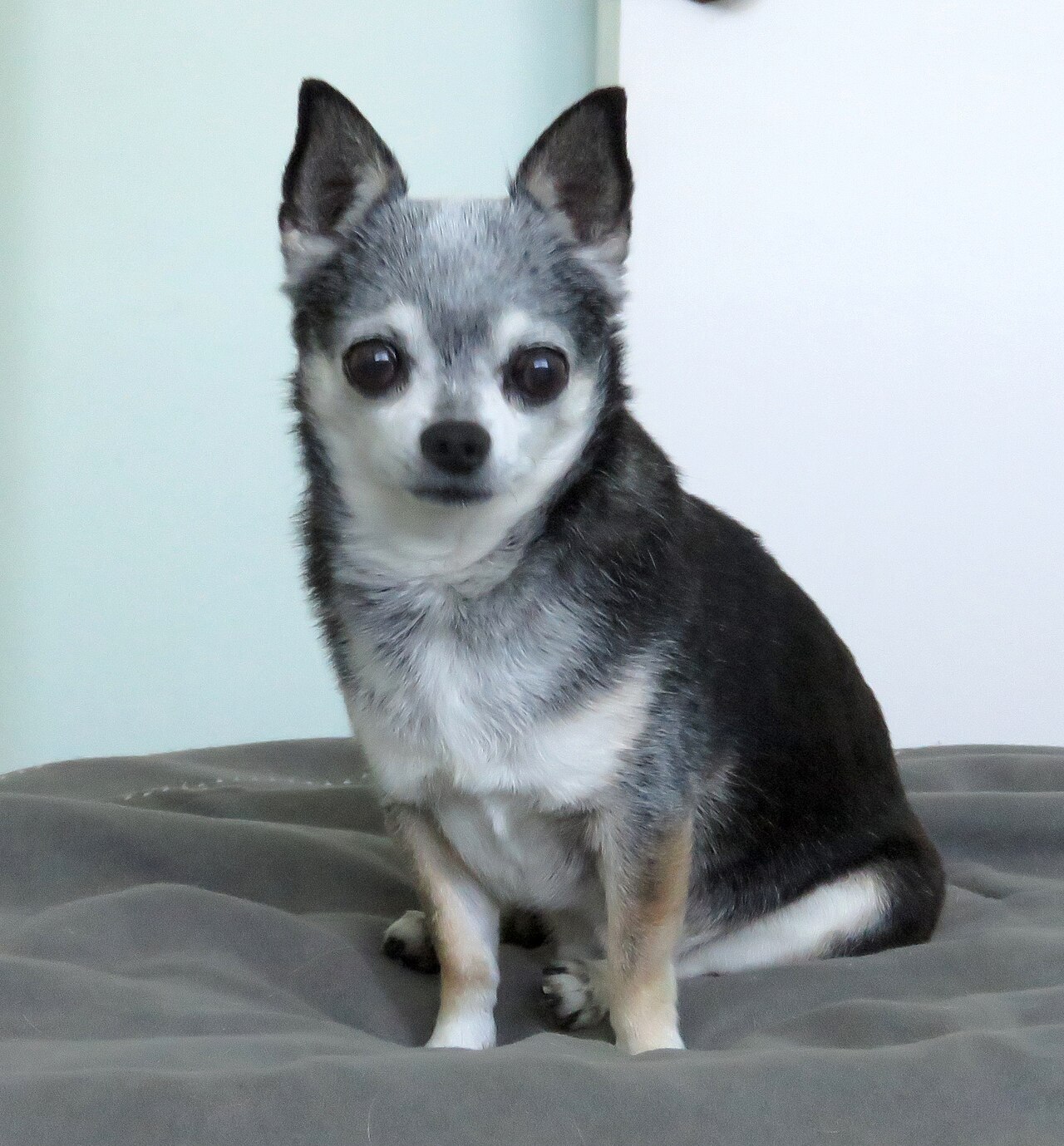
Chihuahuas are one of the small breeds known to be at risk for myxomatous mitral valve disease (MMVD) . According to records, Chihuahuas are as common as Cavalier King Charles Spaniels among MMVD patients in specialist cardiology clinics . Chihuahuas are also frequently among dogs undergoing mitral valve repair . However, studies examining the course of the disease in this breed are relatively limited.
This study combines data from four cardiology centers in Italy, Sweden, and the USA. The authors examine the clinical and echocardiographic features of 390 Chihuahua dogs diagnosed with MMVD . They also address the likelihood of pulmonary hypertension , disease progression, and survival .
1. Purpose of the Study
The study had three objectives. First, they wanted to describe the clinical picture and echocardiographic findings at admission in Chihuahuas with MMVD. This description included the severity of the disease. Second, they aimed to determine the frequency of pulmonary hypertension. Finally, they wanted to determine the rate of disease progression and overall survival.
2. Materials and Methods
Patients and diagnosis
- Centers and periodsThe study is based on records from four specialist cardiology units: two in Italy, and one each in Sweden and the United States. The authors retrospectively reviewed these records. Chihuahuas whose first echocardiographic examination took place between March 1, 2020, and March 1, 2025, were included in the study.
- Definition of racePedigree was not required. The authors defined the breed according to the typical appearance in international breed standards. This appearance includes a stocky body, short nose, round “apple-dome” skull, and large, erect ears. The preferred weight was between 1–4 kg. However, dogs under 8 kg that exhibited typical breed characteristics were also eligible for the study. Long-haired and short-haired varieties were grouped together.
- DiagnosisThe diagnosis of MMVD was based on the presence of two findings together. The first was thickened and/or prolapsed valves. The second was a mitral regurgitation jet visible with each beat on color Doppler. The authors determined disease severity using the adapted ACVIM staging system. This staging system was largely based on echocardiographic It was based on research. Thoracic X-ray The decision to withdraw the medication was up to the doctor. Congestive heart failure (CHF) The diagnosis was based on clinical signs, further investigations, and the response to furosemide administration. Some dogs required high doses of loop diuretics to control signs of heart failure. These dogs entered ACVIM stage D. For dosage details, please refer to the full text of the article.
Measurements and analysis
- Data collectedThe records included signaling (sex, age, body weight, coat type) and concomitant diseases. Murmur intensity and peak intensity point (PMI) were also recorded according to a six-level system. Information on rhythm diagnosis and treatment was also included in the data. The authors included echocardiogram data. left atrium size (LA:Ao ratio) and fractional shortening were noted. Left ventricular diameters normalized to body weight (LVIDDn, LVIDSn) were also among the data. Early diastolic transmitral flow velocity (E wave) was also recorded. Mitral and tricuspid regurgitation (TR) Jet velocities and the presence of chordae rupture/flail valve were also recorded.
- Possibility of pulmonary hypertension.Authors pulmonary hypertension (PH) They classified the probability according to the ACVIM consensus report. This classification looked at the number of changes in certain structures along with the transient jet velocity. These structures were the right atrium and caudal vena cava, ventricles, and pulmonary artery. Ultimately, the probability fell into a low, medium, or high category. They also used thresholds of 3,0 m/s and 3,7 m/s for transient velocity in survival analyses.
- Monitoring and survivalThe authors examined progression by comparing the stages of ACVIM at the initial and final follow-up. Survival data came from records and communication with individuals. Worsening CHF, treatment-unresponsive MMVD complications, and sudden death without symptom were considered cardiac deaths. In contrast, deaths of undetermined cause were classified as non-cardiac.
- StatisticsThe authors combined a small number of dogs in stage D with those in stage C (C/D). They examined survival using the Kaplan-Meier and log-rank tests. For risk factors, they used univariate and multivariate Cox models.
3. MMVD Findings in Chihuahuas
Of the 390 Chihuahuas meeting the study criteria, 223 (57%) came from Ospedale Veterinario San Francesco. 41 (11%) were from the University of Milan, 76 (20%) from Sweden, and 50 (12%) from the USA. 181 (46%) of the dogs were in stage B1, 85 (22%) in stage B2, 114 (29%) in stage C, and 10 (3%) in stage D. The stage distribution did not differ between centers.
Patient characteristics
- SignalmentThe median age was 11 (interquartile range 9,1–12,1), and the median body weight was 3,2 kg (2,76–4,1). 74% of the dogs weighed less than 4 kg. Dogs in the US were older and heavier than those in other centers, and heavier than those in Sweden. The number of males (52%) and females (48%) was close. However, females were in the majority in stage B1 (100 females/81 males), while males were in the majority in stages C/D (76 males/48 females).
- Feather typeOf the 269 dogs whose coat type was recorded, 79% were short-haired and 21% were long-haired. There were no differences between the two varieties in terms of age, body weight, and stage distribution.
- Accompanying diseasesSixty-three (16%) of the dogs had at least one systemic disease. solunum systemi hastalıkları (19 dogs) were coming. This was followed by neurological (14), neoplastic (10), metabolic (6) and gastrointestinal (5) diseases.
- AuscultationOf the 348 dogs for which auscultation data were available, 343 (99%) had the highest intensity of the murmur at the left apex. Murmur intensity The murmur increased significantly as the stages progressed. For example, most dogs in stage B1 had murmurs of level III/VI or less. In contrast, murmurs of level IV/VI and above predominated in stages C/D.
- Rhythm: ECG Of the 333 dogs with data, 331 were in sinus rhythm. Some dogs had single supraventricular premature beats (12) and intermittent second-degree AV block (5). Single ventricular premature beats (3) were also recorded. Two dogs had persistent atrial fibrillation found.
Treatment and echocardiography
- TreatmentFollowing the center's review, 206 dogs received treatment, while 181 dogs remained under observation without treatment. Dogs in Stage B2 received pimobendan. Dogs in Stages C and D received pimobendan along with a loop diuretic. This diuretic was mostly furosemide, less frequently torasemide. Additionally, 120 dogs received an ACE inhibitor, and 117 dogs received spironolactone. The ACE inhibitor was predominantly benazepril, less frequently enalapril and lisinopril. Sildenafil, digoxin, and diltiazem were used in a small number of dogs. Treatment was not standardized across centers. For dosage details, please refer to the full text of the article. For general information on drug groups, see [link to article]. Heart Medication Overview article.
- EchocardiographyThe LA:Ao ratio and LVIDDn gradually increased between stages. E-wave velocity was higher in stages B2 and C/D compared to stage B1. However, there was no difference between B2 and C/D. TR was present in 229 dogs (58%). TR velocity was above 3,0 m/s in 91 dogs and above 3,7 m/s in 38 dogs. The highest values were in stages C/D.
- pH probabilityOf the dogs, 27 (7%) had a high probability of PH and 58 (15%) had a moderate probability. The proportion of dogs with high and moderate probability was higher in the advanced stages.
Causes of progression and death
- Disease progressionThere were 122 dogs with at least two cardiology checkups (median follow-up 488 days). 47% (57/122) of these dogs experienced stage progression, while 53% (65/122) remained unchanged in stage. Follow-up duration was not different between dogs with and without stage progression.
- Causes of deathAt the end of the follow-up period, 158 dogs (41%) had died or been euthanized. 133 dogs (34%) were still alive. 99 dogs (25%) could not be reached. 77 of the deaths (48%) were due to cardiac causes. Cardiac death was more frequent in dogs with advanced disease.
Selected findings according to ACVIM stage.
| ACVIM phase | Number of dogs | Middle LA:Ao | Median survival (all causes) | Median survival (cardiac death) |
|---|---|---|---|---|
| B1 | 181 (46%) | 1,53 | 1.164 days | Unable to calculate (few events) |
| B2 | 85 (22%) | 1,76 | 794 days | 1.956 days |
| CD | 124 (32%) | 2,05 | 345 days | 394 days |
| All | 390 | 783 days |
Survival and risk factors
- survivalThe median all-cause survival was 783 days (95% CI 553–1.013). There was a significant difference between stages (P<0,001). However, there was no difference in survival between geographic regions (P=0,293).
- Risk factors (all-cause mortality)In the univariate analysis, many variables were associated with risk. These included the presence of comorbidities, advanced ACVIM stage, and high probability of PH. High LA:Ao, LVIDDn, and E-wave values were also associated with risk. As was a TR velocity exceeding 3,0 or 3,7 m/s. However, in the multivariate model, only two independent risk factors remained. The first one was... ACVIM phase The second one was (HR 1,51; 95% CI 1,26–1,81; P<0,001). pH probability (HR 1,44; 95% CI 1,12–1,85; P=0,004).
- Risk factors (cardiac death)In the univariate analysis, two additional variables were significant: center/region and chordal rupture/flail valve. In the multivariate model, there were two independent risk factors. The first one was... LA:Ao ratio (HR 2,01; 95% CI 1,45–2,78; P<0,001). The authors divided this ratio into thirds: ≤1,48 / 1,49–1,84 / ≥1,85. The second one again... pH probability (HR 1,45; 95% CI 1,03–2,04; P=0,023).
4. Discussion
According to the authors, the key points are as follows:
Region, hum, and feather type.
- Similarities between regionsThe fact that most of the dogs came from Italy may be a source of bias. It is also unclear why the dogs in the US were older and heavier. This could be due to genetic differences or selection bias. However, disease progression and risk factors were similar regardless of region. The authors therefore suggest that the results can be generalized to some extent to Chihuahuas in Europe and North America.
- Diagnostic value of murmurThe intensity of the murmur increases with the stage of the condition. Previous studies have also shown this finding to be independent of breed. The authors particularly emphasize the importance of high-grade murmurs in adult Chihuahuas. According to the authors, if such a murmur is heard at its highest intensity in the left apex, the suspicion of clinically significant MMVD is strengthened. For details... Abnormal Heart Sounds and Murmurs article.
- Gender and coat typeIn stage B1, the prevalence of females is statistically significant, while in stages C/D, the prevalence of males is statistically significant. However, this difference did not affect survival. Previous studies... DachshundStudies have reported differences in disease severity based on coat type. In Chihuahuas, both long-haired and short-haired varieties were similarly affected. According to the authors, this may be due to the fact that interbreeding between the two varieties is permitted.
Course and prognosis
- The disease does not progress in every dog.Less than half of the dogs under observation showed disease progression. This rate is consistent with previous studies. According to the authors, the disease may progress slowly for a long time in some Chihuahuas, and these dogs may die from non-cardiac causes. Dogs in the early stages died more often from non-cardiac causes. In contrast, those in the advanced stages died more often from cardiac causes. Longer observation may be necessary to detect progression in dogs that appear stable.
- The role of echocardiographyLeft atrial enlargement is a known prognostic indicator in MMVD. In this group of Chihuahuas alone, it was also associated with an increased risk of cardiac death. Different levels of severity can be found within the same stage. Nevertheless, the ACVIM staging system provided a general idea of survival. The median survival was approximately two years in stage B2 and approximately one year in stages C/D. These durations are consistent with previous studies. However, it was not possible to predict which dog would progress through the stages using this data.
- The probability of PH is stronger than the TR velocity alone.This measure combines transcranial velocity with right heart changes. It has remained an independent risk factor for both all-cause and cardiac death. Furthermore, it has been found to be stronger than relying solely on transcranial velocity. The probability of PH was higher in advanced stages. This suggests that PH in this group mostly develops secondarily to left heart disease.
Respiratory diseases and pedigree
- Respiratory system diseasesThe most common group of accompanying diseases are respiratory system disorders. The authors draw attention to previous studies on this subject. According to these studies, Chihuahuas are frequently affected by tracheobronchial collapse and bronchomalacia. Their rates are also high among dogs with precapillary phlebitis. However, due to the retrospective design, a definitive diagnosis of respiratory diseases could not be made in every dog.
- No pedigree checkBreed standards exclude Chihuahuas weighing over 3 kg. However, the study also included heavier dogs with the typical breed appearance. According to the authors, this approach increases the applicability of the findings to both pedigree and unpedigree Chihuahuas.
5. Limitations of the Study
- Retrospective designThe decision-making process was handled by the physicians on duty at the time. Therefore, the treatment was not standardized.
- Uneven contribution of the centersMore than half of the dogs come from a single Italian center. Furthermore, a quarter of the dogs could not be reached during the tracking process.
- Measurement differencesThe echocardiograms were performed by different physicians. It is also known that the agreement between transcranial pressure (TR) rate and invasive pressure measurements is poor. To mitigate this limitation, the authors also used a PH probability assessment.
- Missing dataPedigree information was not mandatory. Body condition score It was not in the records either. Mild comorbidities may have gone unrecorded.
- Classification errorsSome dogs may have been misclassified in the diagnosis of CHF. This could be due to an accompanying respiratory disease or treatment previously initiated by the referring veterinarian. Information on the cause of death was based on records and owner reports. Additionally, deaths of unknown cause were categorized as non-cardiac deaths.
- Conflict of interestThe authors have not reported any conflicts of interest.
6. Clinical Implications of MMVD Findings in Chihuahuas
According to the authors, MMVD affects adult and senior Chihuahuas. The disease occurs in both sexes and both coat types. The authors also note that the behavior of the disease appears similar in Italy, Sweden, and the USA. According to the authors, a high-grade murmur heard in the left apex of an adult Chihuahua significantly increases suspicion of MMVD.
Echocardiography plays a central role in determining the prognosis. ACVIM stage and probability of PH are independent risk factors for all-cause mortality. For cardiac death, independent risk factors are left atrial enlargement (LA:Ao) and probability of PH . In assessing PH, the combined probability approach in the ACVIM consensus report has been highlighted. This approach has provided stronger prognostic information than simply looking at the transient ischemic rate (TR) rate. The authors also emphasize that the stage did not change in more than half of the dogs during the follow-up period.
For basic information on this topic, you can refer to the articles on Myxomatous Mitral Valve Disease (MMVD) and Pulmonary Hypertension . You can also consult the articles on the Treatment Process of Heart Failure , Guidelines for Cardiovascular Diseases , and Breed Predispositions in Dogs.
This article is an original summary of the study cited above. For tables, drug dosages, and detailed data, please refer to the full article.
Other Articles You May Be Interested In
“Life is short, art is long, opportunity is fleeting, experience is deceptive, decision is difficult.”
Hippocrates

