Estimated reading time: 5 minutes
Contents
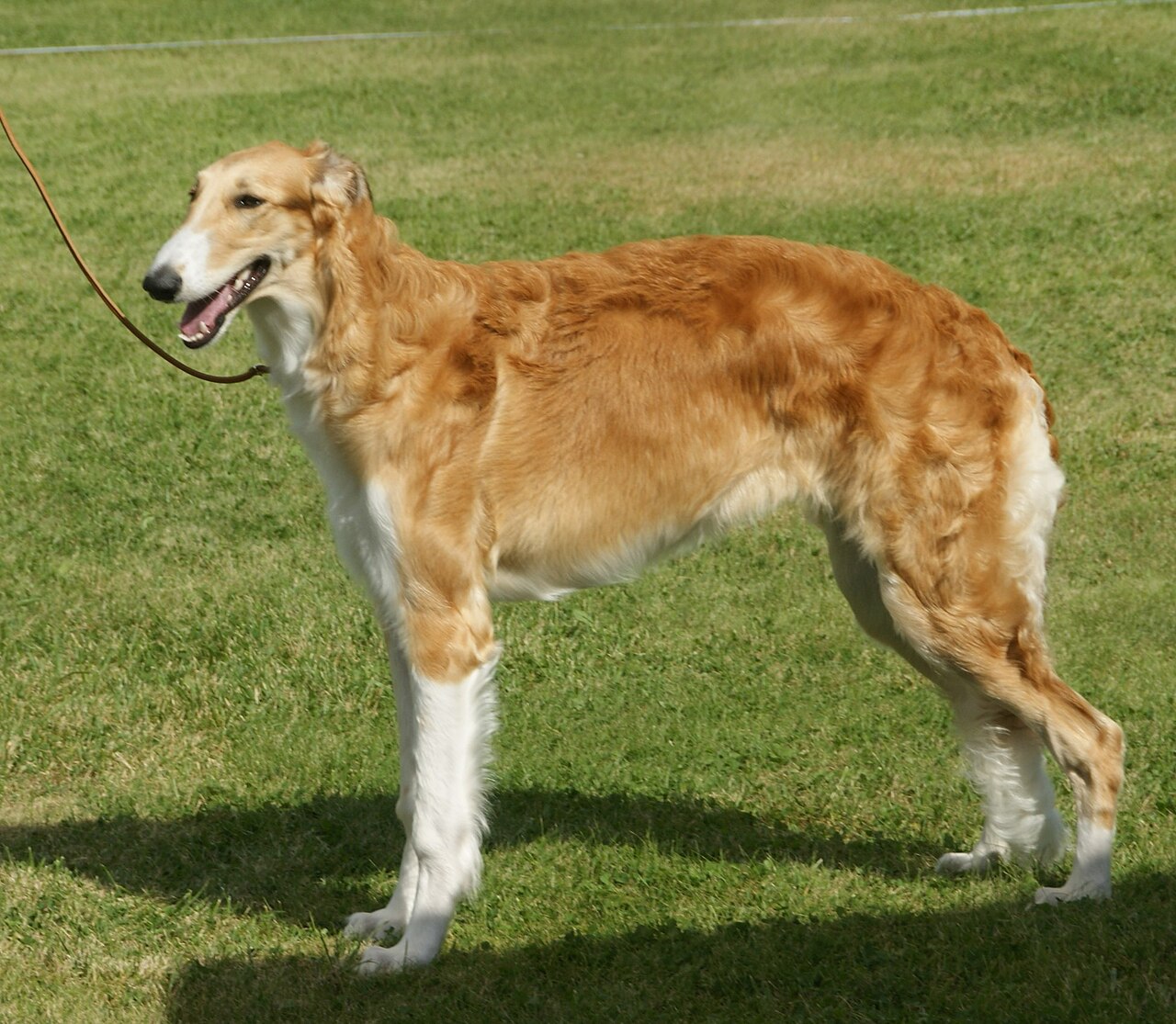
origin
The Borzoi is a breed of hound (a dog that tracks its prey by sight) of Russian origin and belongs to the Eastern European hounds. Hounds are bred to spot prey with their eyesight, chase it at high speed, and catch it. The Borzoi is a large and relatively rare hound, bred to be both fast and strong . Today, it is frequently used in sporting activities such as lure chasing and running.
Body Weight and Appearance
The Borzoi is a large breed of dog. In England, the median weight of 165 Borzois in primary veterinary records was found to be 37,2 kg ; this figure was 33,4 kg for females and 41,9 kg for males. A study of 146 healthy adult Borzois also showed that females were significantly lighter than males.
The Borzoi has a long and narrow head : a study comparing head measurements found that this breed had the narrowest and longest head structure. Another study comparing seven major breeds found that the Borzoi had the lowest body mass index; meaning the breed is slender and tall.
Temperament and Characteristics
A behavioral study based on owner surveys found Borzoi dogs to have low aggression and fear scores , and the breed was considered relatively difficult to train.
Heart Diseases: 1. Ventricular Arrhythmia and Sudden Death
In Borzoi dogs, ventricular arrhythmias can occur even without a structural heart disease. Sudden deaths have also been reported in this breed. Ventricular arrhythmias in cats and dogs sometimes present with no symptoms, while in others they can lead to fainting and sudden death.
- Borzoi dogs brought to cardiologyA study examining records from 14 cardiology centers in the US found that 25 out of 131 Borzoi dogs that underwent echocardiography (19%) had ventricular arrhythmias. 76% of these dogs had either no or very mild structural heart disease. Only one-third of the dogs in the study had undergone rhythm monitoring with ECG or Holter. Of the 55 dogs with long-term follow-up data, 3 reported sudden death.
- In healthy-looking BorzoisIn a study of 82 Borzoi dogs that were clinically healthy and had structurally normal hearts on echocardiography, ventricular arrhythmias were observed in 8 dogs (10%). The same study also frequently showed findings such as prolonged QT interval and ST segment changes on ECG. The authors stated that it is necessary to investigate whether these findings are due to a hereditary ion channel disease (canalopathy) in the breed.
For more details, please see the article on Ventricular Premature Beats and Ventricular Tachycardia .
2. Dilated Cardiomyopathy (DCM)
Dilated cardiomyopathy (DCM) is a heart disease characterized by weakening of the heart muscle and enlargement of the ventricles. In this condition, the heart cannot pump enough blood to the body, and over time, heart failure may develop.
- In BorzoiIn a study where 146 seemingly healthy adult Borzoi dogs were screened with echocardiography, DCM was detected in 9 dogs (6,2%). During follow-up, asymptomatic (latent) DCM was found in 3 more dogs. In the same study, the findings of 2 dogs diagnosed with DCM or suspected DCM returned to normal after dietary changes. The authors suggest that echocardiographic screening for DCM should be considered in Borzoi.
- symptomsDCM can progress for a long time without showing any symptoms. In later stages, symptoms such as fatigue, rapid breathing, fainting, and fluid accumulation in the abdomen may occur.
For more details, please see the articles on Dilated Cardiomyopathy (DCM) in Dogs and Nutritional Cardiomyopathy .
3. Heart Murmur, Valve Leaks, and MMVD
In Borzoi syndrome, murmurs heard during examination and mild valve regurgitation seen on echocardiography often do not indicate a disease. This distinction is made with echocardiography.
- Physiological murmurIn a study examining 146 seemingly healthy Borzoi dogs, physiological (harmless) murmurs were detected in 53,8% of dogs with structurally normal hearts.
- Minor lid leaksIn the same study, trace or mild regurgitation was observed in the mitral valve in 30,2% and in the tricuspid valve in 36,1% of dogs with normal hearts.
- MMVDIn a multicenter study myxomatous mitral valve disease (MMVD) It was detected in 12 dogs, 92% of which were mild. In the screening study, all dogs diagnosed with MMVD had normal heart size.
- congenital heart disease: Borzoi, tricuspid valve dysplasia It is considered among the dog breeds with increased risk. In a multicenter study, the most frequently detected congenital heart disease was tricuspid dysplasia (6 dogs).
For information on the steps to take when a heart murmur is detected, you can refer to the article "Heart Murmur: What Happens If a Veterinarian Hears a Murmur?" .
How is it evaluated during a cardiology examination?
In Borzoi, when heart disease is suspected or a cardiology examination is performed for screening purposes , the procedure follows this sequence:
- History form: history, complaints, past illnesses, and respiratory rate counted while resting at home.
- Physical examinationThis includes listening to the heart with a stethoscope (auscultation). Murmurs heard in this breed are often physiological; irregular rhythms can be noticed at this stage.
- Thoracic radiographs in two views: Heart silhouette and lungs are evaluated. Breed-specific radiographic heart size reference values have been published for Borzoi.
- EchocardiographyThe size of the ventricles, the contractile force of the heart muscle, and the valves are examined; DCM is diagnosed with this examination. Separate, gender-specific echocardiography values have been published for Borzoi.
- ECG: heart rhythm is assessed; 24-hour ECG is performed if necessary.Holter(recorded.) The authors noted that in Borzoi, some intervals on the ECG are often longer than general canine values, and that breed-specific ECG values are needed.
- Blood pressure measurement.
- Blood tests if neededIn a study conducted on healthy Borzois, all dogs found to have arrhythmias had normal troponin I levels, indicating heart muscle damage. Arrhythmias are detected using ECG and Holter recordings.
The veterinary cardiologist determines the interval for check-ups and which examinations need to be repeated, based on the examination findings.
Recommendations for Borzoi Owners
- Asymptomatic dogArrhythmias and DCM have been detected even in Borzois that appear healthy to their owners. Regular heart evaluation is important even if the dog shows no symptoms.
- If a murmur is heardIn this breed, murmurs are often physiological; echocardiography reveals the cause of the murmur.
- Breeding dogsDogs to be used in breeding must undergo a prior cardiological evaluation.
- Emergency symptomsA dog exhibiting fainting, sudden weakness or collapse, difficulty breathing, and rapidly increasing abdominal swelling should be evaluated by a veterinarian immediately.
- Before anesthesiaEvery dog that is going to receive anesthesia, regardless of age, must have it done beforehand. from cardiology examination It needs to pass.
Borzoi are greyhounds notable for their slender and long build. Even without symptoms, dogs of this breed should have their hearts evaluated by a veterinary cardiologist.
Other Articles You May Be Interested In
"Ignorance far more often breeds overconfidence than knowledge."
Charles Darwin

Comments are closed.