Estimated reading time: 5 minute
Table of Contents
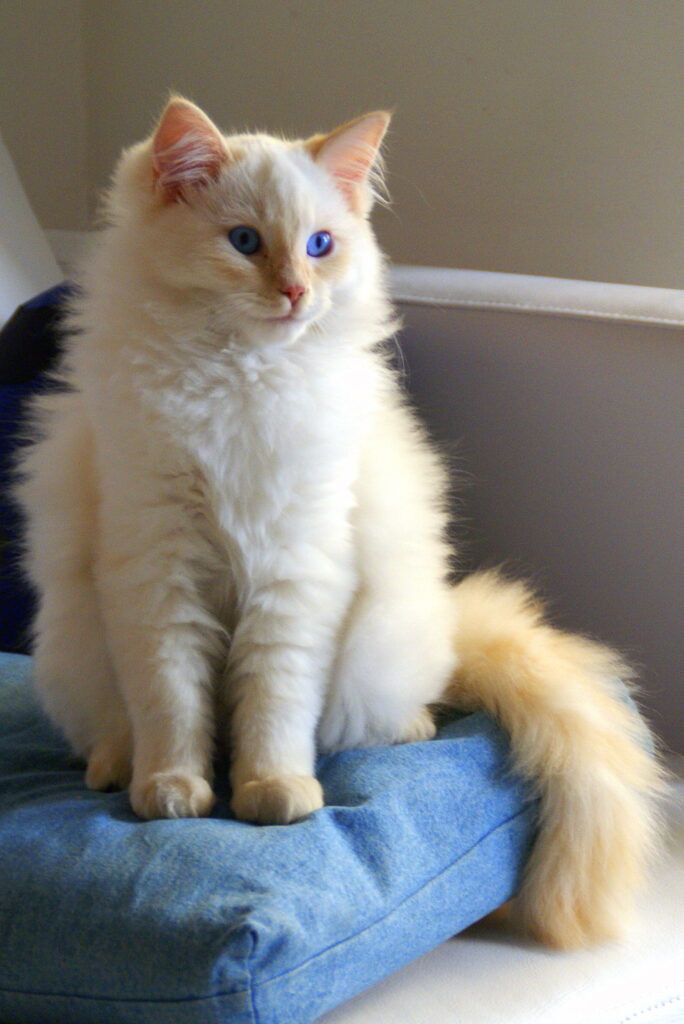
Cassia Afini, CC BY 2.0 https://creativecommons.org/licenses/by/2.0, via Wikimedia Commons
origin
The Ragdoll is a relatively new cat breed, developed in the United States in the 1960s. The breed's ancestor was a white cat named Josephine, and crossbreeding programs have resulted in the Ragdoll, known today for its calm and docile nature.
Body Weight and Appearance
The Ragdoll is a large cat breed. Adult males usually weigh between 5.4-9.1 kg, while females weigh between 3.6-6.8 kg.
Ragdolls are muscular, large and attract attention with their long fur. Their eyes are usually blue. Their fur is semi-long and silky. Their color range is wide, but they are generally known for their "colorpoint" (darker color at the tips), "bicolor" (two colors) and "mitted" (white on the paw tips) patterns.
Temperament and Characteristics
Ragdoll cats are known for their calm, docile and affectionate nature. They get the name “Ragdoll” (rag doll) from the fact that they relax and let their bodies go free when they are held. They are people-oriented and social cats, and they usually like to hang around their owners at home. They love to play and get along well with children. They adapt easily to home life and are not too noisy.
Heart Diseases: 1. Arterial Thromboembolism (ATE)
What is Arterial Thromboembolism?
Arterial thromboembolism (ATE) usually occurs when a clot in the heart travels to the aorta and blocks blood flow to the legs. In cats, this condition manifests itself with sudden paralysis, pain, and coldness of the hind legs.
ATE in Ragdoll Cats
A study reported that Ragdoll cats are prone to ATE. This study found that Ragdoll cats have a higher risk of aortic thromboembolism compared to the general population. 14,40 times higher It has been determined that male cats are more affected by this condition, and the risk for male cats is found to be 75% higher.
symptoms
• Sudden hind leg paralysis (immobility)
• Coldness and pale discoloration in the hind legs
• Severe pain and constant meowing
• Acceleration of breathing and general discomfort symptoms
Treatment
Aortic thromboembolism is an emergency and requires immediate intervention. Treatment involves removing the blockage and dissolving the blood clot. Blood thinners, clot busting drugs and painkillers are used for this. However, in cases where lung capacity is reduced and heart disease has reached the stage of congestive heart failure, additional treatments such as diuretics may be included in this treatment protocol. Surgery is also an option, but according to current scientific publications, the success rate of surgery is quite low. Therefore, your veterinarian will determine the most appropriate treatment plan according to the severity of the condition and your cat's general health.
Heart Diseases: 2. Hypertrophic Cardiomyopathy (HCM)
What is Hypertrophic Cardiomyopathy?
Hypertrophic cardiomyopathy (HCM) is the most common heart disease in cats. This disease is characterized by thickening (hypertrophy) of the heart muscles. Although the term "enlarged heart" is often used, this condition is actually enlargement of the atria It is related to. Enlargement of the atria increases the risk of blood clots. In cats with heart disease, your veterinarian may prescribe blood thinners to reduce the risk of blood clots.
HCM in Ragdoll Cats
HCM in Ragdoll cats is known to be a genetic disease transmitted in an autosomal dominant pattern. This genetic mutation has been identified in approximately 23-27% of Ragdoll cats worldwide. Cats carrying the mutation homozygous (two copies of the mutation) have a higher risk of developing HCM than heterozygous carriers. Heterozygous cats have a milder disease course, while homozygous cats have a shorter lifespan and more severe disease.
symptoms
• Difficulty in breathing
• Weakness and easy fatigue
• Loss of appetite
• Fainting and loss of consciousness (rare)
• Fluid accumulation in the chest or abdominal cavity (congestive heart failure)
Diagnosis and Treatment
HCM is usually diagnosed by echocardiography (ultrasound). This allows the thickness of the heart walls and the width of the atria to be determined. If heart enlargement (atrial dilatation) is detected, it is important to consider the risk of a clot. Anti-blood clotting medications may be prescribedTreatment aims to slow the progression of the disease and control symptoms.
Advice for Ragdoll Owners
• Regular Veterinary Checks: Ragdoll cats should undergo regular heart screenings due to their genetic predisposition. Your veterinarian may recommend an echocardiogram to detect HCM early.
• Beware of Clot Risk: Enlargement of the heart (especially the atria) increases the risk of clots. Therefore, blood thinners may be used. When your veterinarian recommends these medications, it is very important to give them regularly.
• Watch Out for Symptoms of Shortness of Breath and Weakness: Symptoms such as difficulty breathing and fluid accumulation in the chest cavity may indicate that HCM is progressing. If you notice these symptoms, contact your veterinarian immediately.
Ragdoll cats have become a favorite among families due to their calm nature, affectionate nature and what they are known for as “lap cats.” However, Genetic predisposition to heart diseases such as aortic thromboembolism (ATE) and hypertrophic cardiomyopathy (HCM) It should be noted that ATE is a condition that requires urgent intervention, so you should take action immediately when you notice the symptoms (paralysis, cold paws, painful meowing). On the other hand, HCM is a genetic disease and can be treated with early diagnosis. Do not neglect regular veterinary check-ups to maintain the health of your Ragdoll.
Other Articles You May Be Interested In
“A ship at its port is safe, but that is not what ships are built for.”
Grace Hopper
