Estimated reading time: 4 minute
Contents
origin
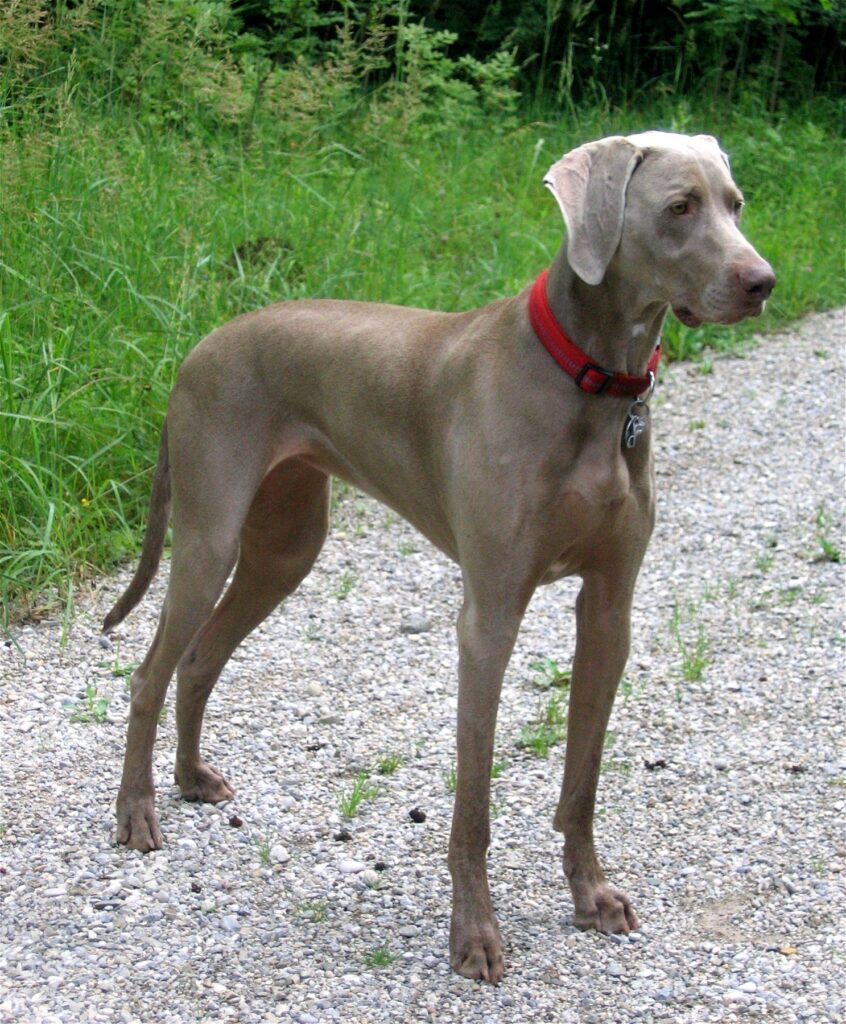
The Weimaraner is a dog breed originating in Germany and known for its hunting abilities. It was bred by the nobility as a hunting dog in the 19th century . Due to its success in hunting and its tracking skills, it is also known by the nickname " Grey Ghost ".
Body Weight and Appearance
The Weimaraner is a large dog breed . An adult Weimaraner typically weighs between 25-40 kg .
The Weimaraner has a muscular, athletic, and elegant physique . Its short, glossy, and smooth coat is one of its most distinctive features. Its colors are generally silver-grey, grey-brown (silver-grey), or blue-grey . It has a broad head , a long nose , and drooping ears . Its eyes are usually blue, amber, or light grey.
Temperament and Characteristics
The Weimaraner is an intelligent, energetic, and courageous dog breed. Due to its hunting instincts , it needs an active lifestyle and loves to run and play in open spaces. It forms strong bonds with family members and dislikes being left alone. Anxiety and behavioral problems can develop if it doesn't receive sufficient physical and mental stimulation . It is a trainable dog, but requires patient and consistent training due to its stubborn nature . Weimaraners get along well with children and other pets , but may be wary of strangers.
Heart Diseases: Congenital Heart Disease (CHD)
What is the disease?
Congenital heart disease is a condition in which dogs have abnormalities in the structure or function of their heart from birth . This disease involves structural defects in the blood vessels, valves, or heart muscle.
This Disease in Weimaraner
One study has shown that the Weimaraner breed is predisposed to congenital heart disease. In a study conducted in Italy that examined 976 dogs diagnosed with congenital heart disease, the probability of congenital heart disease in Weimaraners was found to be 9,4 compared to all dogs referred.
Congenital problems reported in this breed include tricuspid valve dysplasia and a congenital opening between the abdominal cavity and the pericardium (peritoneopericardial diaphragmatic hernia).
symptoms
• Exercise Intolerance: Becoming tired quickly while walking and lack of motivation while playing games.
• Shortness of breath: Breathing faster than normal or difficulty breathing.
• Growth Retardation: Puppies grow slower than normal.
• Cyanosis: A bluish discoloration of the tongue and gums.
Diagnosis and Treatment
• Diagnosis: Cardiology examination is performed in the following order: information form (history, complaints, past illnesses, respiratory rate) → physical examination (including stethoscope) → chest X-ray in two positions → echocardiography → ECG → blood pressure measurement → blood tests if deemed necessary. Echocardiography (heart ultrasound) is definitive in diagnosis.
• Treatment: The treatment plan is determined by a veterinary cardiologist after examination, based on the type and severity of the congenital defect. For details, please refer to the article on Congenital Heart Diseases .
Pulmonary Artery Dissection (PAD)
What is the disease?
Pulmonary artery dissection is a rare cardiovascular disease caused by a tear or rupture of the walls of the pulmonary artery . This causes blood to flow abnormally and can lead to increased pressure in the lungs.
This Disease in Weimaraner
In a series compiled from referral centers in the United Kingdom and the United States, 37,5% of pulmonary artery dissection cases were Weimaraner; therefore, it is thought that race may predispose to this condition.
symptoms
• Getting tired quickly during exercise
• Shortness of breath and rapid breathing
• Fainting (syncope) and weakness
Diagnosis and Treatment
• Diagnosis: The cardiology examination steps listed above are followed.
• Treatment: The treatment plan will be determined by a veterinary cardiologist after examination.
Recommendations for Weimaraner (Vorstehhund) Owners
• Regular Heart Checks: Weimaraners are prone to congenital heart disease and pulmonary artery dissection, so regular veterinary checkups are crucial.
• Physical Activity Note: Weimaraners are energetic dogs, but if signs of shortness of breath, fatigue, or fainting are observed during exercise, a veterinarian should be consulted.
• Watch for Symptoms: If you notice any symptoms in your Weimaraner such as rapid breathing, bluish tongue, lack of exercise, or easy fatigue, you should consult a veterinarian immediately.
• Early Diagnosis Saves Lives: Early diagnosis and treatment allow Weimaraners to live a healthy life. Early detection of congenital heart defects, in particular, leads to more successful treatment outcomes.
• Pre-Anesthesia: Regardless of age, every dog undergoing anesthesia must have a cardiology examination beforehand.
Weimaraners are wonderful companions known for their hunting abilities, agility, and intelligence . Even without symptoms, dogs of this breed should have their hearts regularly evaluated by a veterinary cardiologist, starting from puppyhood.
Other Articles You May Be Interested In
“Nothing strengthens authority like silence.”
Leonardo da Vinci
