Estimated reading time: 6 minute
Table of Contents
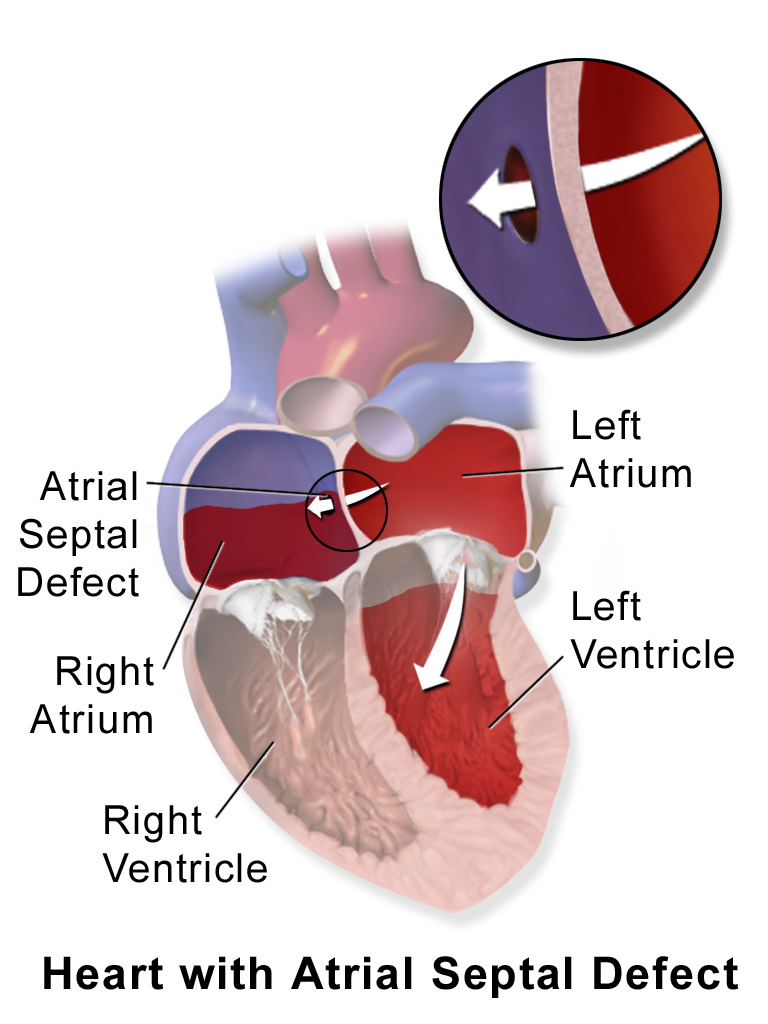
BruceBlaus. When using this image in external sources it can be cited as:Blausen.com staff (2014). “Medical gallery of Blausen Medical 2014”. WikiJournal of Medicine 1 (2). DOI:10.15347/wjm/2014.010. ISSN 2002-4436., CC BY 3.0 https://creativecommons.org/licenses/by/3.0, via Wikimedia Commons
What is Atrial Septal Defect (ASD)?
Atrial septal defect (ASD)A blockage in the atrial septum between the right and left atriums of the heart hole or is an abnormal connection. This opening allows blood to pass freely between the two atriums. Normally, blood from the left atrium should only pass through the mitral valve to the left ventricle. However, when there is an atrial septal defect, a “shunt” from the left atrium to the right atrium occurs, overloading the right heart.
Although atrial septal defects are rare in dogs and cats, they can go unnoticed in many cases. This makes them difficult to diagnose, especially since the small holes do not produce a distinct sound such as a murmur. Most ASDs are echocardiography detected incidentally during the procedure.
Types of ASD
ASDs are classified according to the location and origin of the holes:
• Ostium Primum Defect (ASD-OS1): This defect is located in the lower part of the atrioventricular septum and is usually seen in association with mitral or tricuspid valve abnormalities.
• Ostium Secundum Defect (ASD-OS2): This is the most common type of ASD and occurs in the fossa ovalis area, a structure that is open during the fetal period but must close after birth.
• Sinus Venosus Defect: This type of defect is located at the junction of the vena cava and the atrium and is usually associated with abnormal connections of the lung veins (pulmonary vein).
Symptoms and Clinical Findings
Most small ASD does not show symptoms and these animals are usually It is completely healthy.However, if the hole is large and the pressure on the right heart increases, the following symptoms may occur:
• Weakness and easy fatigue
• Exercise intolerance (especially in moderate to severe ASD)
• Shortness of breath ve rapid breathing (in severe cases)
• Murmur in the chest area (can be heard with careful auscultation)
• Heart enlargement: This can be detected by x-ray or echocardiography.
The classic sign of ASD in humans is Fixed division of S2 (second heart sound divided by respiration without change) This sign is more difficult to detect in dogs and cats because their heart rates are higher.
Diagnostic Methods
To diagnose ASD, veterinarians use the following methods:
1. Physical Examination
• The veterinarian listens to the heart with a stethoscope murmur can hear your voice.
• Murmur of ASD is usually in the pulmonary valve region a soft sound systolic murmurStop.
2. Electrocardiography (ECG)
• QRS axis shifts to the right, because the right ventricle enlarges and the electrical axis shifts.
• Wide and tall P waves may indicate enlargement of the right atrium.
• Branch blocks ve atrial fibrillation Rhythm disturbances such as may be observed in patients with ASD.
3. X-Ray (Radiography)
• Enlargement of the heart (cardiomegaly) are detected.
• Right ventricular enlargement, heart “on X-ray”reverse D" may cause it to take the form of.
• Expansion of the pulmonary artery ve pulmonary vascular hypercongestion observable.
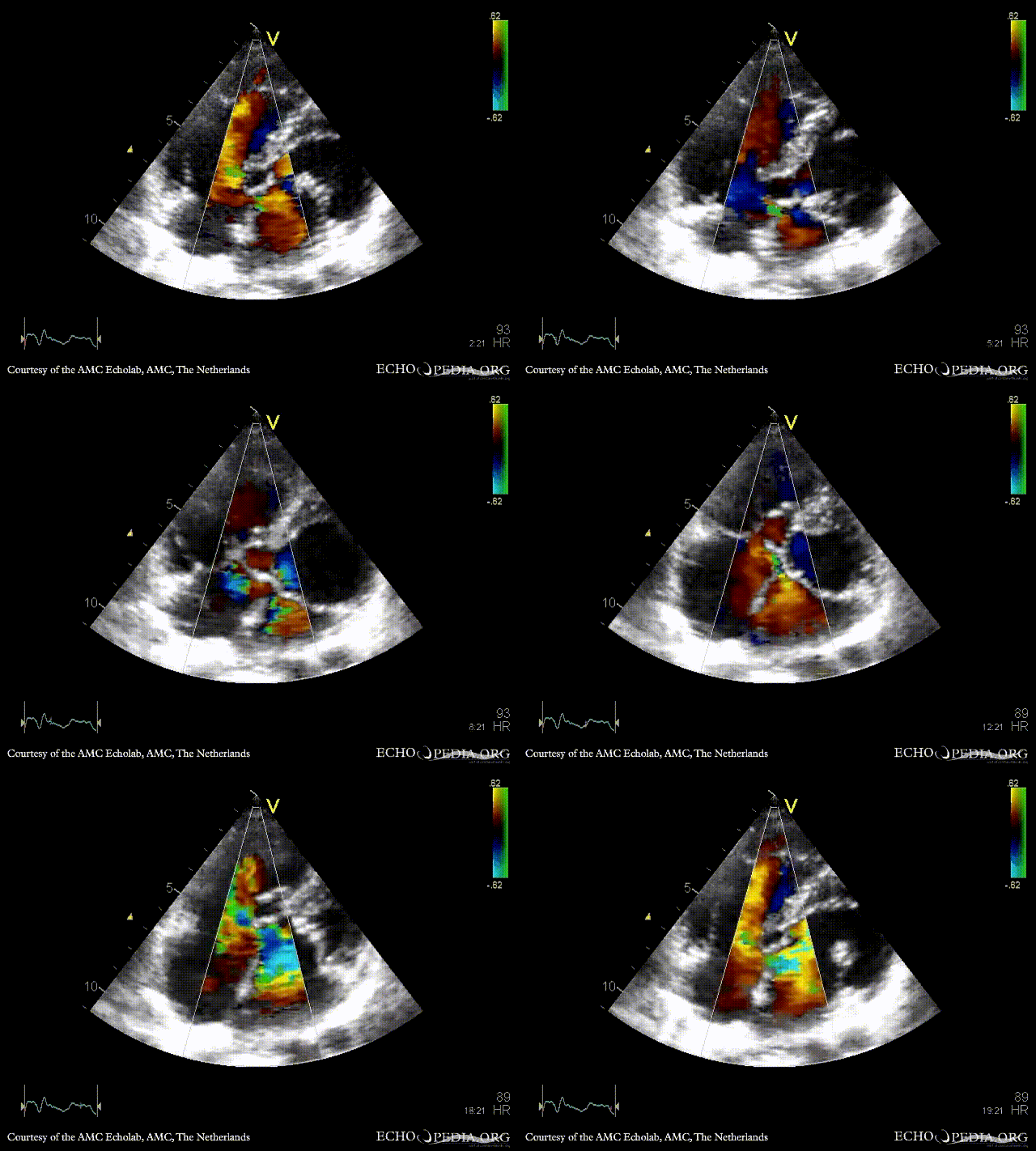
4. Echocardiography (Heart Ultrasound)
• Ostium secundum defect The best method of detecting echocardiographyd.
• Color Doppler With , the passage of blood between the right and left atrium can be visualized. This flow is usually seen in color Doppler images. a colorful jet is monitored as.
• 2D and 3D Echocardiography: Provides complete images of the heart structures from different angles. This is necessary to assess the size and rim of the defect.
Treatment Methods
Treatment for ASD varies depending on the hole size, the size of the shunt, and the animal's overall health.
1. Medical Treatment
• Small ASDs are usually does not require treatment.
• Diuretics: If right heart failure has developed, it is used to remove excess fluid from the body.
• Inotropic drugs: Used to increase heart contraction.
• Vasodilators: Helps to reduce the workload of the heart.
2. Surgical and Percutaneous Closure
• Amplatzer Septal Occluder: This device for human use is used for percutaneous (intravenous) closure of ASD. The device is inserted through a femoral or jugular vein and sits over the hole, stopping blood flow.
• Surgical RepairIf the hole is too large and cannot be closed with a percutaneous device, a surgical patch This process is usually closed using a heart-lung bypass device (CPB) is used.
Natural History and Prognostic Factors
• Small ASDsMost minor ASDs are tolerated without any intervention and the animals have a normal lifespan.
• Medium or Large ASDs: Enlargement of the heart chambers, right ventricular overload and right heart failure may develop. If left untreated, this condition can shorten the animal's life expectancy.
Atrial septal defectASD is an abnormal opening between the right and left atrium of the heart that allows blood to pass between the two atriums. Small ASDs are often asymptomatic, but larger ASDs can cause overload on the right side of the heart.
• Echocardiography, is the most important tool in diagnosing ASD. Especially color Doppler, is used to indicate shunt.
• Small ASDs usually do not require intervention, but for large ASDs, surgery or Amplatzer device with special devices such as percutaneous closure It may be necessary.
• Untreated large ASDs, right heart failure, exercise intolerance ve lung congestion may cause.
Therefore, especially Labrador Retriever and for other predisposed breeds early diagnosis and regular control It is very important. Depending on the severity of the ASD and the size of the shunt, your veterinarian will evaluate treatment options. It is important to remember that ASDs that are diagnosed early usually can be managed successfully and animals to a normal lifespan may have.
Other Articles You May Be Interested In
"One man's freedom ends where another man's freedom begins."
John Stuart Mill
