Estimated reading time: 6 minute
Table of Contents
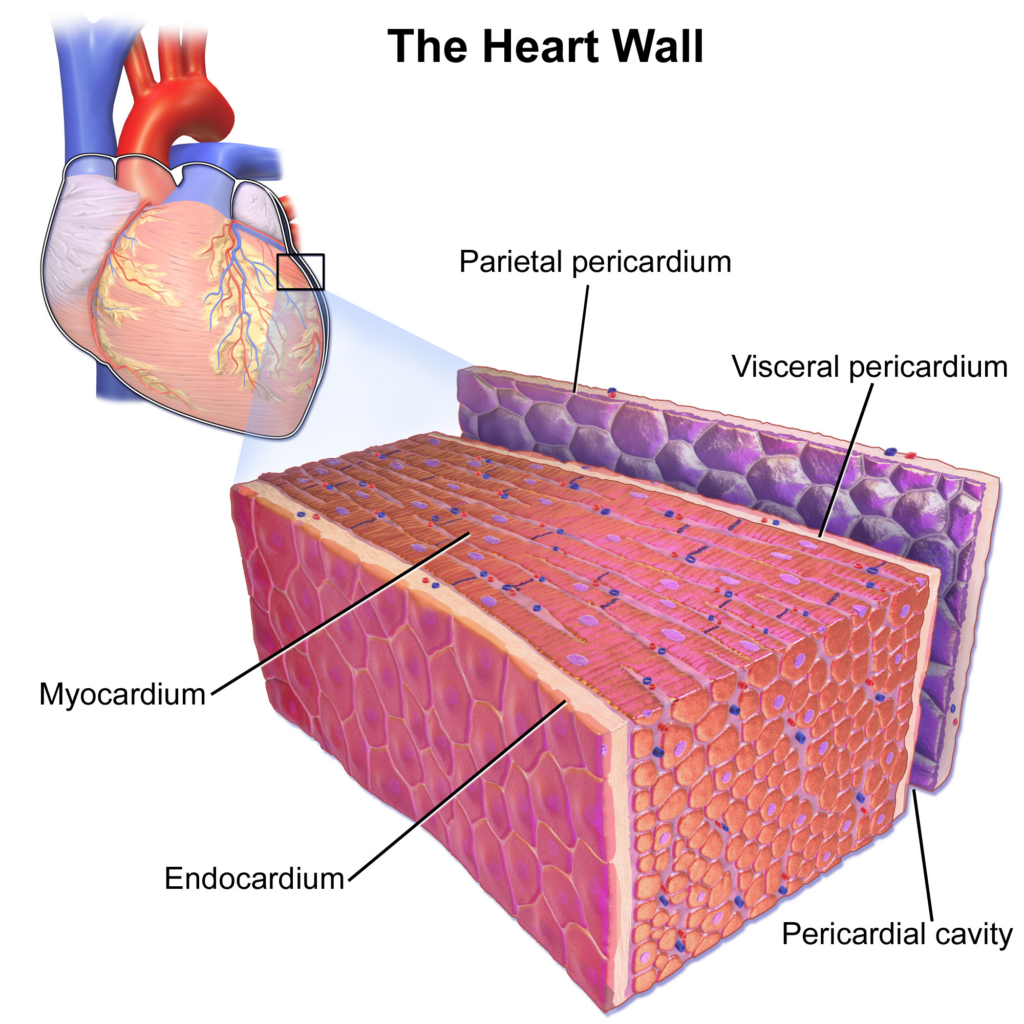
BruceBlaus. When using this image in external sources it can be cited as:Blausen.com staff (2014). “Medical gallery of Blausen Medical 2014”. WikiJournal of Medicine 1 (2). DOI:10.15347/wjm/2014.010. ISSN 2002-4436., CC BY 3.0 https://creativecommons.org/licenses/by/3.0, via Wikimedia Commons
What are the myocardial diseases seen in dogs?
Primary myocardial diseases are the most common in dogs. The myocardium is the muscle tissue that carries out the pumping and electrical functions of the heart, and these functions are often impaired in myocardial disease. This can cause dogs with myocardial disease to experience the following problems:
• Arrhythmias: Irregularities in heart rhythm.
• Exercise intolerance: Rapid fatigue during physical activities.
• Difficulty breathing: Especially in advanced cases, it may occur as a result of fluid accumulation in the lungs (pulmonary edema) due to inadequate pumping capacity of the heart.
Although there are several types of myocardial disease, the two most common forms in dogs are:
1. Dilated Cardiomyopathy (DCM): It is characterized by thinning and weakening of the heart muscles, which leads to enlargement of the heart and reduced pumping capacity.
2. Arrhythmogenic Right Ventricular Cardiomyopathy (ARVC): It is characterized by the replacement of muscle tissue with fat and connective tissue in the right ventricle. This can cause arrhythmias and impaired heart function.
Management and treatment of these diseases require a specific treatment plan determined by your veterinarian, depending on the type and severity of the disease and the dog's general health. Regular checkups and early diagnosis play an important role in improving your dog's quality of life.
Dilated Cardiomyopathy (DCM)
Dilated Cardiomyopathy (DCM) is a disease that causes the pump function of the heart muscle to deteriorate and the heart to enlarge. The cause of Dilated Cardiomyopathy (DCM) in dogs is usually genetic or hereditary. Breeds with known hereditary forms of Dilated Cardiomyopathy (DCM) include Doberman Pinschers, Cocker Spaniels, Dalmatians, Great Danes, Irish Wolfhounds, Portuguese Water Dogs, and Standard Schnauzers. In some cases, Dilated Cardiomyopathy (DCM) can be associated with deficient intake of important compounds such as taurine or carnitine.
Dilated Cardiomyopathy (DCM) occurs in two distinct clinical forms:
• Latent (Asymptomatic) DCM: It is the form in which there are no clinical disease symptoms.
• Overt (Symptom) DCM: This is the form in which dogs show obvious signs of heart disease.
Latent Dilated Cardiomyopathy (DCM): Diagnosis at this stage is difficult and is usually monitored with a heart ultrasound (echocardiogram), a 24-hour electrocardiogram (Holter monitoring), blood tests that may indicate early disease (for example, NT-proBNP or cardiac troponin I), and genetic testing for some breeds. There are limited treatment options at this stage to slow the progression of the disease. For example, medications that support heart function may be particularly effective in certain breeds (for example, Doberman Pinschers). The treatment protocol is determined by veterinarians based on the current stage and clinical findings of each patient.
Symptomatic Dilated Cardiomyopathy (DCM): At this stage, there is often difficulty breathing with fluid accumulation in the lungs, and the disease usually leads to congestive heart failure. Dogs with symptomatic Dilated Cardiomyopathy (DCM) and congestive heart failure must receive lifelong medication to remove this excess fluid and support heart function. The medications used usually consist of groups of drugs that reduce fluid accumulation, support heart muscle function, and regulate blood circulation. In addition, if arrhythmia is observed, additional treatments may be required to control it. All treatment protocols are planned and planned individually by veterinarians according to the patient's clinical condition and the current stage of the disease.
Prognosis: The prognosis before congestive heart failure develops with Dilated Cardiomyopathy (DCM) can be quite variable. However, once congestive heart failure occurs, the average survival time is generally between 6-12 months. During this period, frequent veterinary check-ups and regular re-evaluation of treatment dosages are of utmost importance.
Arrhythmogenic Right Ventricular Cardiomyopathy (ARVC)
Arrhythmogenic Right Ventricular Cardiomyopathy (ARVC) is a common myocardial disease, especially in Boxers and sometimes in other breeds such as Bulldogs. There is a genetic mutation test for Arrhythmogenic Right Ventricular Cardiomyopathy (ARVC), a hereditary disease in Boxers. This test detects the presence of the mutation, allowing breeders to make informed decisions. Dogs with two copies of the mutation (homozygous) are more likely to have a more severe form of the disease, which is an important tool in understanding the severity of the disease.
Arrhythmogenic Right Ventricular Cardiomyopathy (ARVC) is a disease that usually affects the right side of the heart and causes life-threatening arrhythmias. Many dogs diagnosed with ARVC experience collapse (syncope) due to the arrhythmias. Although less common, in some dogs, a severe form of ARVC can cause an enlarged heart and reduced pump function. This is assessed with imaging methods such as a heart ultrasound (echocardiogram) and a chest X-ray.
Diagnosis and Monitoring: The most effective method of diagnosing Arrhythmogenic Right Ventricular Cardiomyopathy (ARVC) is to monitor dogs 24 hours a day with a device called a Holter monitor. This device records and evaluates the frequency and severity of heart rhythm disturbances.
Treatment: Antiarrhythmic drugs are commonly used to regulate the heart rhythm of dogs with Arrhythmogenic Right Ventricular Cardiomyopathy (ARVC). The treatment protocol is individualized by the veterinarian based on the dog's current clinical findings and the stage of the disease. Regular monitoring and adjustment of drug dosages are necessary during treatment.
Prognosis: The prognosis for dogs with arrhythmogenic right ventricular cardiomyopathy (ARVC) is generally good. They tolerate antiarrhythmic therapy well and their quality of life can be maintained with regular monitoring. However, more severe forms of arrhythmogenic right ventricular cardiomyopathy (ARVC) that affect mechanical heart function have a poorer prognosis and may develop congestive heart failure. Such patients require more rigorous monitoring and a detailed treatment plan.
Other Articles You May Be Interested In
“The saddest aspect of life right now is that science is accumulating knowledge faster than society is accumulating wisdom.”
Isaac Asimov
