Estimated reading time: 9 minutes
Contents
- 1. Why is a Heart Check Important When Adopting a Child?
- 2. Learn about your race's predisposition to heart disease.
- 3. Infant Murmur: Innocent or a Disease?
- 4. Parental Screening and Breeding Programs
- 5. Questions to Ask the Breeder
- 6. Auscultation of the Heart During the Initial Veterinary Examination
- 7. Warning Signs to Watch Out For
- 8. Cardiology Examination: When and How?
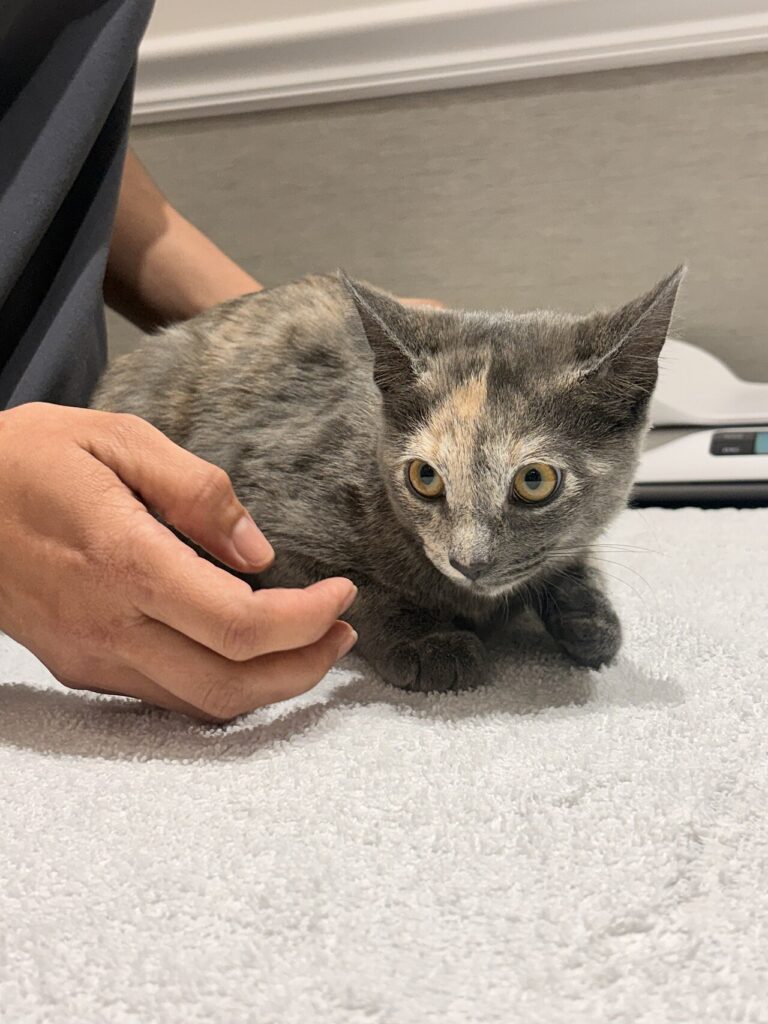
A heart check at the time of adoption is a step that should be on the list of anyone considering getting or adopting a kitten or puppy. Congenital heart disease is the most common type of heart disease in cats and dogs under one year old. A significant number of these diseases do not show any symptoms during the initial examination, and the puppy may appear perfectly healthy to its owner.
Below is a checklist of points to consider when choosing a puppy and afterwards. For a general overview, please see the article on Congenital Heart Diseases .
1. Why is a Heart Check Important When Adopting a Child?
Congenital heart defects are present at birth. Severe ones often lead to infant mortality around birth. Mild ones may go unnoticed until later in life. Even puppies with severe defects may appear completely normal to many owners in their first few months. Therefore, a puppy appearing healthy does not necessarily mean its heart is healthy.
Some congenital heart defects are treatable, and if detected early, treatment can be planned in a timely manner. Early diagnosis can also help prevent consequences such as heart failure or increased pressure in the pulmonary arteries (pulmonary hypertension). Furthermore, individuals who acquire puppies from susceptible breeds are often not fully aware of potential problems beforehand.
2. Learn about your race's predisposition to heart disease.
Most congenital heart defects in dogs are more common in certain breeds. In cats, congenital heart diseases are rarer, and for most, no breed predisposition has been identified. For details, please see the sections on Breed Predispositions in Dogs and Breed Predispositions in Cats .
• Congenital diseases in dogs : Poodles and German Shepherds are predisposed to patent ductus arteriosus (PDA; a condition where a vascular connection that should close after birth remains open); English Bulldogs, French Bulldogs, American Staffordshire Terriers, and Boxers are predisposed to pulmonary stenosis (PS; narrowing at the pulmonary artery exit); and Golden Retrievers, Dogue de Bordeaux, Newfoundlands, and Boxers are predisposed to subaortic stenosis (SAS; narrowing under the aortic valve).
• For example : In a cardiology series of 6.504 dogs in Italy, the odds ratio for congenital heart disease in French Bulldogs was found to be 6,98.
• Acquired diseases in dogs : Myxomatous mitral valve disease (MMVD) is most common in small to medium-sized breeds such as Cavalier King Charles Spaniels, Dachshunds, Miniature Poodles, and Yorkshire Terriers. Dilated cardiomyopathy (DCM), on the other hand, is more prevalent in larger breeds. Dobermann Pinschers, Great Danes, Irish Wolfhounds, Newfoundlands, Boxers, Saint Bernards, Labradors, and Golden Retrievers are among these breeds.
• Cats : Most cats with hypertrophic cardiomyopathy (HCM) are not pedigree; however, Maine Coon, Ragdoll, British Shorthair, Persian, Bengal, Sphynx, Norwegian Forest Cat, and Birman breeds are considered to be at higher risk. Mitral valve dysplasia is the most frequently reported congenital heart disease in Sphynx cats.
MMVD, DCM, and HCM are often diagnosed later in life. However, knowing your breed predisposition beforehand makes diagnosis easier and allows for early detection. You can refer to the Boxer and Maine Coon pages for examples.
3. Infant Murmur: Innocent or a Disease?
Heart murmurs are the most prominent sign of congenital heart disease; most structural heart defects manifest as murmurs. However, not every murmur in a kitten indicates illness. Innocent (functional) murmurs are very common in kittens with structurally healthy hearts. Innocent murmurs can be expected in 15–25% of healthy kittens and puppies brought to their first veterinary visit. Most of these murmurs disappear as the kitten grows older.
Innocent murmurs are heard during the contraction phase of the heart (systole) and are mild (grade 1–2 out of 6). They vary from day to day and with movement or excitement. They often have a musical tone and are best heard at the base of the left heart. However, it is difficult, sometimes impossible, to distinguish an innocent murmur from one of a mild heart defect by listening alone. The intensity of the murmur also does not always indicate the severity of the disease. For example, in some severe diseases, the murmur is mild or not heard at all.
Innocent murmurs do not affect quality of life or lifespan. However, those associated with disease are linked to an increased risk of illness and death. Therefore, the two should be differentiated as early as possible. For details, you can refer to the article Abnormal Heart Sounds and Murmurs.
4. Parental Screening and Breeding Programs
Most congenital heart defects are thought to be inherited; PDA, PS, SAS, ventricular septal defect (VSD), and Tetralogy of Fallot are inherited polygenically (due to the influence of multiple genes). Since no specific mutation has been found for these defects, there is no genetic test. If asymptomatic affected animals are not detected through screening, they can reproduce and pass the disease to their offspring.
There are examples demonstrating the effectiveness of screening programs. In Italy, a program lasting 18 years screened over 5.000 Boxers. In this program, only dogs without detected heart disease were used for breeding. By the end of the program, the incidence of SAS had decreased from 11,5% to 1,5%, and the incidence of PS had decreased from 5% to 0,5%. Such screenings should be performed by trained veterinarians using tests such as echocardiography, ECG, and long-term ECG recording ( Holter ).
• MMVD screening : Annual screenings are conducted for high-risk breeds such as Cavalier King Charles Spaniels. These screenings are organized by breed clubs and conducted by veterinary cardiologists. It is recommended that dogs found to have a murmur or mitral valve regurgitation during breeding age should not be used for breeding.
• DCM screening : This is performed on Dobermann Pinschers using echocardiography and Holter monitoring. Since a single screening does not guarantee that the disease will not develop in the future, it is repeated annually.
• HCM screening : This is performed on breeding cats using echocardiography. Maine Coon, Norwegian Forest Cat, Siberian Cat, British Shorthair, Ragdoll, Cornish Rex, Devon Rex, and Sphynx are among the breeds screened. Cats with HCM findings on echocardiography should not be used for breeding.
Race-Specific Genetic Tests
There is also genetic testing for mutations associated with heart disease in some races:
• Maine Coon : MyBPC3-A31P mutation associated with HCM.
• Ragdoll : MyBPC3-R820W mutation associated with HCM. Cats carrying a duplicate (homozygous) copy of one of these two mutations are at higher risk.
• Dobermann Pinscher : PDK4 and titin mutations associated with DCM in North America. PDK4 testing has been reported as not predicting the disease in Dobermanns in Europe.
• Boxer syndrome : A striatin mutation associated with arrhythmogenic right ventricular cardiomyopathy (ARVC) in some Boxer syndrome individuals. However, not every Boxer syndrome carrier develops the disease.
Genetic testing can provide helpful information in breeding selection. However, basing breeding decisions solely on testing is debatable, as not every animal carrying the mutation develops the disease. A negative result does not guarantee that the disease will never develop, and a positive result does not guarantee that it will definitely develop. For example, HCM has been reported in Maine Coon and Ragdoll cats that do not carry the mutation. Therefore, genetic testing is not a substitute for clinical screening. For more details, please see the article on Feline Hypertrophic Cardiomyopathy (HCM) .
5. Questions to Ask the Breeder
In breeds where demand is rapidly increasing, it has been reported that some breeders do not pay enough attention to breeding selection. Examining the health records of the mother, father, and siblings is also recommended. The breeder can be asked the following questions:
• Have the mother and father undergone cardiac screening? You can ask which method was used (auscultation, echocardiography, Holter monitoring if necessary) and the results records.
• Is there a genetic test for this breed? For breeds where genetic testing is available, the test results of both parents may be requested.
• Is there a history of heart disease in the family? Have the mother, father, siblings, or previous puppies been diagnosed with a heart murmur or heart disease? Any heart murmur heard in the mother, father, sibling, or puppy of a dog with congenital heart disease should be investigated, even if it seems harmless.
• Has the puppy been examined by a veterinarian? During vaccination checkups, they may ask if the heart was heard and if any murmurs were noted.
6. Auscultation of the Heart During the Initial Veterinary Examination
People who are going to get or adopt a puppy are advised to take the puppy to a veterinarian as early as possible. This way, congenital heart diseases that do not show symptoms can be detected. Many congenital heart diseases are first detected during vaccination checkups, when the heart is listened to.
The heart should be evaluated in a quiet environment, listening to all valve areas and both sides of the chest. Murmurs can be missed due to rapid heartbeat, small chest, panting, and purring in cats. A normal physical examination does not necessarily indicate that the animal is genetically healthy.
Healthy puppies with mild murmurs can be monitored again during vaccination checkups, especially if they are not intended for breeding. Fever, infection, and anemia should also be ruled out. Murmurs that increase in intensity or duration, particularly in large breeds prone to SAS or tricuspid dysplasia, should be evaluated with echocardiography.
7. Warning Signs to Watch Out For
Most sick puppies show no symptoms at the first examination. If a puppy does show symptoms, the risk of death is high if treatment is not started promptly. The following symptoms require immediate evaluation of the heart:
• Growth retardation : a condition where a baby lags behind its siblings.
• Easy fatigue : inability to tolerate exercise, weakness, collapse during exertion.
• Rapid or labored breathing : fast breathing, increased respiratory effort, shortness of breath, or coughing.
• Cyanosis : Bluish discoloration of the tongue and gums; in reverse flow PDA, this may only be seen in the posterior mucosa.
• Fainting (syncope) : This is especially common in dogs with severe SAS or arrhythmias.
• Paralysis of the hind legs in cats : reported in cats with mitral valve dysplasia due to blood clots (arterial thromboembolism).
For information on the symptoms of heart disease, you can check out the article "10 Symptoms of Heart Disease in Cats and Dogs".
8. Cardiology Examination: When and How?
The timing of a cardiology examination is determined by the situation, not the age. In the following cases, the puppy's heart should be evaluated by a veterinary cardiologist:
• When a murmur is heard : especially if it is moderate or high in intensity, continuous, heard during the relaxation phase of the heart (diastole), or on the right side of the chest, and does not disappear or worsens. Murmurs in infants should not be taken lightly.
• If there is a breed predisposition : especially if the offspring will be used for breeding in the future.
• If there is a family history of heart disease : if one of the parents or siblings has been diagnosed with heart disease.
• When warning signs are observed : act immediately if you notice any of the above symptoms.
• Before anesthesia: every cat and dog, regardless of age, should undergo a cardiology examination before receiving anesthesia. For details, please see the article on Pre-Anesthesia Cardiology Examination .
A cardiology examination proceeds in the following order:
• Information form : history, complaints, past illnesses, and respiratory rate. Breed and health information of parents and siblings are also noted.
• Physical examination : including auscultation; assessment of the location and intensity of the murmur, pulses, and mucosal color.
• Chest X-ray in two positions : chamber and vessel dilation and fluid accumulation in the lungs are examined. Mild defects usually do not cause any changes.
• Echocardiography : Doppler echocardiography is a fundamental method for definitively diagnosing and determining the severity of congenital heart diseases.
• ECG : Shows clues about rhythm abnormalities and chamber enlargement. However, a normal ECG does not rule out congenital heart disease.
• Blood pressure measurement
• Blood tests : performed if deemed necessary; results may be misleading when compared to adult values due to physiological anemia in puppies.
If a heart murmur is detected in a puppy being considered for adoption, if its breed has a predisposition to heart disease, or if any of the other warning signs are noticed, the puppy's heart should be evaluated by a veterinary cardiologist.
Other Articles You May Be Interested In
"In biology, nothing makes sense unless viewed in the light of evolution."
Theodosius Dobzhansky
